


Arnold Schoenberg
Released Album
Chamber
-
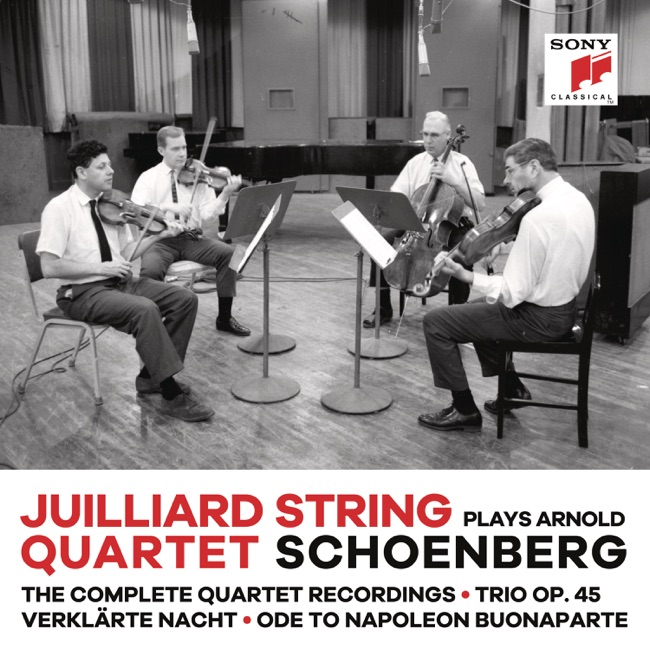 July 26, 2024
 -
-
-
 October 27, 2023
 -
 April 7, 2023
 -
Orchestral
-
 September 13, 2024
 -
 September 13, 2024
 -
-
 June 7, 2024
 -
 March 22, 2024
 -
 February 3, 2023
Vocal
-
 February 2, 2024
 -
-
 June 9, 2023
 -
 May 5, 2023
 -
-
 October 21, 2022
Keyboard
-
 December 8, 2023
 -
 November 24, 2023
 -
 July 7, 2023
 -
 May 10, 2023
 -
 April 7, 2023
 -
 February 12, 2023
Artist Info
Role:Composer PerformerCountry: AustriaBirth:September 13, 1874 in AustriaDeath:July 13, 1951 in Los Angeles, CAPeriod:ContemporaryModernGenre:ChamberKeyboardOrchestralVocalArnold Schoenberg was a revolutionary composer and music theorist who played a significant role in the development of modern classical music. He was born on September 13, 1874, in Vienna, Austria, to a Jewish family. His father, Samuel Schoenberg, was a shoemaker, and his mother, Pauline Nachod, was a piano teacher. Schoenberg showed an early interest in music and began taking piano lessons at the age of eight. Schoenberg's musical education began in earnest when he enrolled in the Vienna Conservatory in 1895. He studied composition with Alexander von Zemlinsky, a prominent composer and conductor, and later became his brother-in-law. Schoenberg's early works were heavily influenced by the late Romantic style of composers such as Richard Wagner and Gustav Mahler. In 1901, Schoenberg married Mathilde Schoenberg, and they had two children together. However, their marriage was tumultuous, and they separated in 1913. Schoenberg's personal life was further complicated by his conversion to Christianity in 1898, which caused a rift with his Jewish family. Schoenberg's breakthrough as a composer came with his development of atonal music, which he first explored in his String Quartet No. 2 (1908). Atonal music is characterized by the absence of a tonal center or key, and Schoenberg believed that it was the natural evolution of Western classical music. His atonal works, such as the Five Pieces for Orchestra (1909) and Pierrot Lunaire (1912), were met with controversy and criticism from traditionalists. In addition to his work as a composer, Schoenberg was also a prolific music theorist. He developed a system of composition called the twelve-tone technique, which he first used in his Suite for Piano (1921). The twelve-tone technique involves arranging the twelve notes of the chromatic scale in a specific order, called a tone row, and using that row as the basis for the entire composition. This technique was a major departure from traditional tonal harmony and had a significant impact on the development of modern classical music. Schoenberg's most famous works include his opera Moses und Aron (1932-33), which was left unfinished at the time of his death, and his Variations for Orchestra (1928). He also wrote several works for chamber ensembles, including the Chamber Symphony No. 1 (1906) and the String Quartet No. 4 (1936). Schoenberg's career was interrupted by the rise of the Nazi party in Germany, which led to his exile from Europe. In 1933, he moved to the United States, where he taught at the Malkin Conservatory in Boston and later at the University of California, Los Angeles. He became an American citizen in 1941. Schoenberg's later works, such as the String Trio (1946) and the Piano Concerto (1942), were more tonal in nature and reflected his growing interest in traditional forms of music. However, his legacy as a composer and music theorist remains tied to his groundbreaking work in atonal and twelve-tone music. Arnold Schoenberg died on July 13, 1951, in Los Angeles, California, at the age of 76. He is remembered as one of the most influential composers of the 20th century, whose innovations in music theory and composition continue to shape the course of classical music today.More....
Recent Artist Music


7
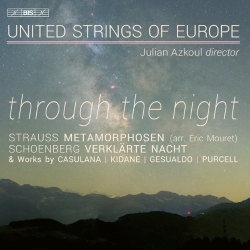
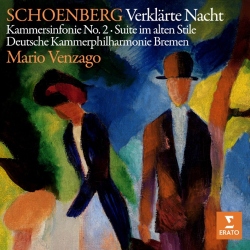
Transfigured Night (arr. from String Sextet, Op.4)
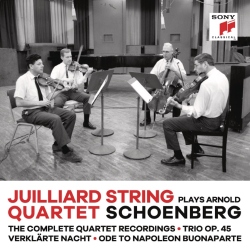
Verkl채rte Nacht, Op. 4 (1943 version for string orchestra)
29:56


12

2:18
14
6:52
Works Highlight
Recommend Playlist















Related Artists
Copyright Ⓒ 2013 Davinci Finger. All rights reseved
Service Terms & Policy