


Richard Wagner
Released Album
Opera
-

-
-
 July 5, 2024
 -
 June 26, 2024
 -
 June 14, 2024
 -
 April 19, 2024
Orchestral
-
 February 2, 2024
 -
 August 26, 2022
 -
 August 19, 2022
 -
 July 20, 2022
Vocal
-
 May 31, 2024
 -
-
-

-
-
 March 31, 2023
Keyboard
-
 December 9, 2023
 -
 September 15, 2023
 -
 July 7, 2023
 -
 April 7, 2023
 -
-
 August 19, 2022
Artist Info
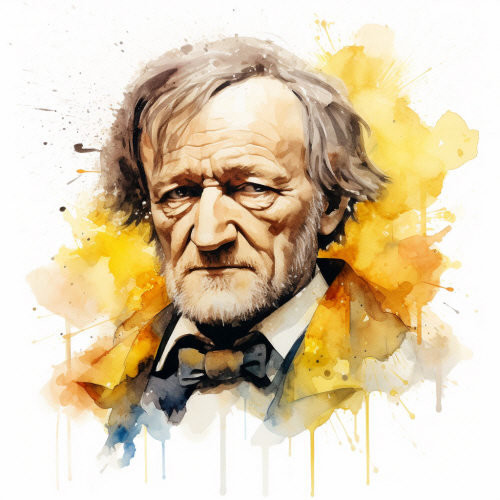
Role:ComposerCountry: GermanyBirth:May 22, 1813 in Leipzig, GermanyDeath:February 13, 1883 in Venice, ItalyPeriod:RomanticGenre:OperaRichard Wagner was a German composer and conductor who is widely regarded as one of the most important figures in the history of classical music. Born on May 22, 1813, in Leipzig, Germany, Wagner was the ninth child of Carl Friedrich Wagner, a police clerk, and Johanna Rosine Wagner. His father died when he was just six months old, and his mother remarried the following year. Wagner's stepfather, Ludwig Geyer, was an actor and playwright who had a significant influence on the young Wagner's artistic development. Wagner's early years were marked by a love of music and a desire to become a composer. He began taking piano lessons at the age of six and soon showed a talent for the instrument. He also began composing his own music at a young age, and by the time he was a teenager, he had written several works for piano and voice. In 1831, Wagner enrolled at the University of Leipzig, where he studied music theory and composition. He also became involved in the local music scene, attending concerts and operas and meeting other musicians and composers. In 1833, he moved to Dresden, where he worked as a conductor and composer for the city's opera house. Wagner's early works were heavily influenced by the music of Ludwig van Beethoven and Franz Liszt, but he soon developed his own distinctive style. His first major opera, "Die Feen," was completed in 1834 but was not performed until 1888, long after Wagner's death. His next opera, "Das Liebesverbot," was completed in 1836 and was based on Shakespeare's "Measure for Measure." The opera was not a success, however, and Wagner soon left Dresden for Paris. In Paris, Wagner became involved in the revolutionary politics of the time and wrote several articles and essays on the subject. He also continued to compose, completing several works for piano and voice, as well as his third opera, "Rienzi," which was premiered in Dresden in 1842. The opera was a great success and established Wagner as a major figure in the world of opera. In 1849, Wagner became involved in the revolutionary movement in Germany and was forced to flee the country after his involvement in a failed uprising. He spent the next several years in exile, living in Switzerland and Italy and continuing to compose. During this time, he wrote several works that would become some of his most famous, including "Tristan und Isolde" and "Die Meistersinger von Nürnberg." In 1864, Wagner was finally able to return to Germany, where he was welcomed as a hero. He settled in Munich and began work on his most ambitious project yet, a cycle of four operas called "Der Ring des Nibelungen" (The Ring of the Nibelung). The cycle, which tells the story of a magical ring that grants its owner unlimited power, took Wagner more than 20 years to complete and is considered one of the greatest achievements in the history of opera. Wagner's later years were marked by controversy and scandal. He became involved in the anti-Semitic movement in Germany and wrote several essays and articles that espoused racist and nationalist views. He also had several affairs and was involved in a number of financial scandals. Despite these controversies, Wagner's music continued to be celebrated and performed around the world. He died on February 13, 1883, in Venice, Italy, at the age of 69.More....
Recent Artist Music
7

2:38





Works Highlight
Recommend Playlist




















Related Artists
Copyright Ⓒ 2013 Davinci Finger. All rights reseved
Service Terms & Policy