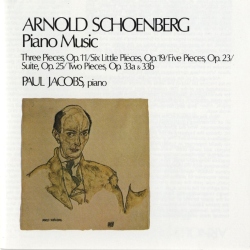
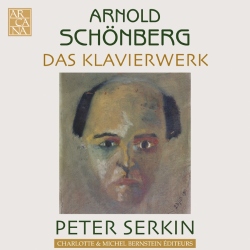
Arnold Schoenberg
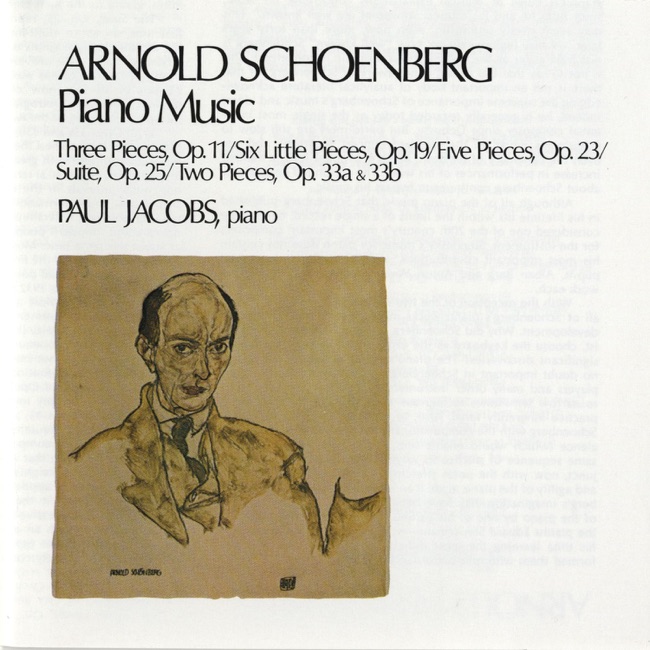
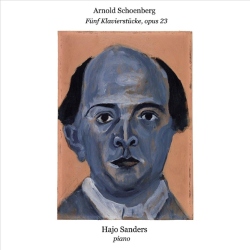
Pieces (5) for piano, Op. 23
Released Album
Recent Album

Featured Album
Works Info
Composer:Arnold SchoenbergGenre:KeyboardStyle:KeyboardCompose Date:1920 - 1923Average_duration:12:14Movement_count:5Movement ....Arnold Schoenberg's 'Pieces (5) for piano, Op. 23' is a significant work in the composer's oeuvre, marking a turning point in his compositional style. The work was composed in 1920 and premiered in Vienna on January 23, 1924, with Eduard Steuermann as the pianist. The five movements of the work are as follows: 1. Sehr langsam (Very slow) 2. Rasch (Quickly) 3. Langsam (Slowly) 4. Schwungvoll (Lively) 5. Walzer (Waltz) The first movement, 'Sehr langsam,' is characterized by its sparse texture and use of dissonant harmonies. The movement is marked by a sense of stasis, with the piano playing a series of repeated notes that gradually build in intensity before dissipating into silence. The second movement, 'Rasch,' is a frenetic and virtuosic display of pianistic technique. The movement is marked by its use of irregular rhythms and jagged melodic lines, which create a sense of tension and instability. The third movement, 'Langsam,' is a hauntingly beautiful piece that showcases Schoenberg's mastery of harmony and counterpoint. The movement is marked by its use of lush, chromatic harmonies and intricate contrapuntal textures. The fourth movement, 'Schwungvoll,' is a lively and energetic piece that features a driving rhythmic pulse and a playful, dance-like melody. The movement is marked by its use of syncopation and irregular accents, which give the piece a sense of forward momentum and excitement. The final movement, 'Walzer,' is a waltz that is both nostalgic and melancholic. The movement is marked by its use of lush, romantic harmonies and a lilting, waltz-like rhythm. The piece ends with a sense of unresolved tension, as the final chord is left hanging in the air. Overall, 'Pieces (5) for piano, Op. 23' is a significant work in Schoenberg's oeuvre, marking a transition from his earlier, more tonal style to his later, more atonal works. The piece is characterized by its use of dissonant harmonies, irregular rhythms, and intricate contrapuntal textures, which create a sense of tension and instability. Despite its challenging nature, the work remains a beloved and influential piece in the piano repertoire.More....
Works Music
Released Music

2
2:54
5
2:48
6
3:16
7
2:47
Featured Music