


Karl Erb
Released Album
Vocal
-
 March 5, 2013
 -
 January 29, 2002
 -
 July 21, 1998
 -
 February 7, 1995
Opera
-
-
 October 14, 2008
 -
 October 26, 2006
 -

-
 June 26, 2001
 -
 May 30, 2000
Choral
-
 March 5, 1999
Artist Info
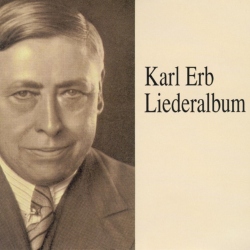
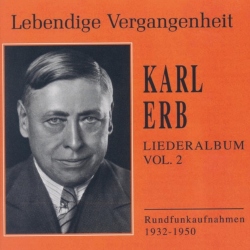
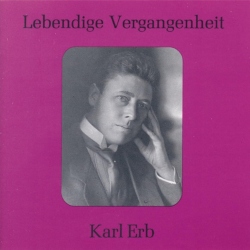
Period:BaroqueClassicalRomanticGenre:ChoralOperaVocalKarl Erb was a renowned German tenor who made a significant contribution to the world of classical music during the early 20th century. Born on February 26, 1877, in Marktheidenfeld, Germany, Erb was the son of a schoolteacher. He showed an early interest in music and began singing in the church choir at a young age. Erb received his formal music education at the Hochschule für Musik in Munich, where he studied under the tutelage of the famous tenor, Franz Nachbaur. After completing his studies, Erb made his debut as a professional singer in 1902, performing in the role of Tamino in Mozart's "The Magic Flute" at the Stadttheater in Augsburg. Over the next few years, Erb established himself as one of the leading tenors of his time, performing in various opera houses across Germany. He was particularly renowned for his performances in the works of Mozart, Beethoven, and Schubert. Erb's voice was characterized by its clarity, purity, and emotional depth, which made him a favorite among audiences and critics alike. In 1911, Erb was invited to perform at the Bayreuth Festival, where he sang the role of Walther von Stolzing in Wagner's "Die Meistersinger von Nürnberg." This was a significant milestone in Erb's career, as it marked his first performance at one of the most prestigious music festivals in the world. He went on to perform at the Bayreuth Festival for several years, earning critical acclaim for his performances in various Wagnerian operas. During World War I, Erb served in the German army as a medic. He was wounded in action and was awarded the Iron Cross for his bravery. After the war, Erb resumed his singing career and continued to perform in various opera houses across Europe. He also began to make recordings, which helped to popularize his music beyond the confines of the concert hall. In 1927, Erb was appointed as a professor of singing at the Hochschule für Musik in Munich, where he taught for several years. He was known for his rigorous teaching methods and his ability to bring out the best in his students. Many of his pupils went on to become successful singers in their own right. Throughout his career, Erb received numerous awards and honors for his contributions to the world of classical music. In 1937, he was awarded the Goethe Medal for his outstanding achievements in the arts. He was also made an honorary citizen of his hometown of Marktheidenfeld in recognition of his contributions to the community. Erb's career came to an abrupt end in 1945, when he was arrested by the Allied forces and accused of being a Nazi sympathizer. He was held in custody for several months before being released without charge. However, the accusations had a lasting impact on his reputation, and he was never able to fully recover his standing in the music world. Despite the setbacks he faced in his later years, Karl Erb remains one of the most celebrated tenors of the early 20th century. His recordings continue to be admired for their beauty and emotional depth, and his legacy as a teacher and mentor to young singers lives on. Erb died on November 22, 1958, in Munich, Germany, at the age of 81.More....
Recent Artist Music
7
4:16

10
The Corregidor
Erster Aufzug. Ein Gepflasterter Platz An Der Mühle~Frasquita: "In Dem Schatten Meiner Locken"
2:57
Related Artists
Copyright Ⓒ 2013 Davinci Finger. All rights reseved
Service Terms & Policy