


Maria Stader
Released Album
Choral
-
 August 18, 2023
 -
 March 12, 2021
 -
 October 23, 2020
 -
 September 18, 2020
 -
 November 2, 2018
 -
 October 19, 2018
Opera
-
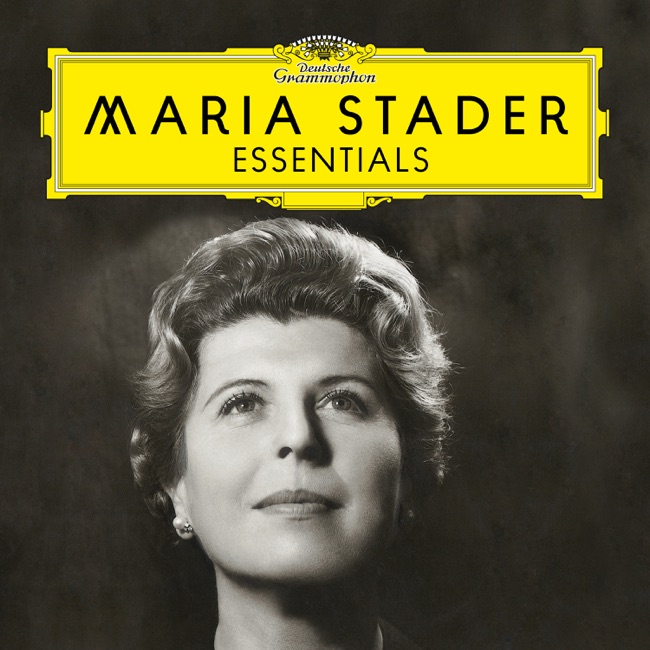 April 26, 2019
 -
 October 13, 2017
 -
 July 7, 2015
 -
 July 7, 2015
 -
 June 18, 2015
 -
 April 16, 2015
Symphony
-
-
 July 3, 2012
 -
 June 4, 2007
 -
 December 13, 2006
 -
-
 October 13, 2004
Artist Info
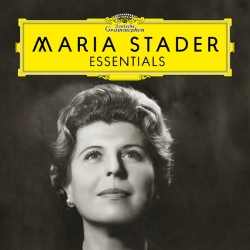
Birth:November 5, 1911 in Budapest, HungaryDeath:April 27, 1999 in Zürich, SwitzerlandPeriod:ClassicalRomanticGenre:ChoralOperaMaria Stader was a Hungarian-Swiss soprano who was born on November 5, 1911, in Budapest, Hungary. She was the daughter of a Hungarian father and a Swiss mother. Her father was a lawyer, and her mother was a pianist. Stader grew up in a musical family, and she started singing at a young age. She studied at the Budapest Academy of Music, where she received her diploma in 1936. Stader made her debut in 1939 at the Budapest Opera House, where she sang the role of the Queen of the Night in Mozart's "The Magic Flute." She quickly gained recognition for her powerful voice and her ability to sing difficult coloratura roles. In 1942, she joined the Zurich Opera, where she remained for the next 20 years. Stader's career took off in the 1950s, when she began performing in major opera houses and concert halls around the world. She was known for her interpretations of Mozart, Bach, and Handel, and she was particularly admired for her performances of the soprano solos in Bach's cantatas. She also sang the role of the Queen of the Night in Mozart's "The Magic Flute" many times throughout her career. One of Stader's most memorable performances was at the Salzburg Festival in 1954, where she sang the soprano solos in Bach's Mass in B Minor. Her performance was widely praised, and it helped to establish her as one of the leading sopranos of her time. She also performed at the Edinburgh Festival, the Glyndebourne Festival, and the Bayreuth Festival, among others. Stader was known for her clear, pure voice, and her ability to convey emotion through her singing. She was also known for her impeccable technique, which allowed her to sing difficult coloratura passages with ease. Her performances were always marked by a sense of musicality and sensitivity to the text. Stader received many awards and honors throughout her career. In 1955, she was awarded the title of Kammersängerin by the Swiss government, in recognition of her contributions to the arts. She was also awarded the Order of Merit of the Federal Republic of Germany in 1965, and the Austrian Cross of Honor for Science and Art in 1971. Stader retired from singing in 1972, after a career that spanned more than 30 years. She continued to teach singing, and she was known for her dedication to her students. She died on April 27, 1999, in Zurich, Switzerland, at the age of 87. In conclusion, Maria Stader was a Hungarian-Swiss soprano who was known for her clear, pure voice, and her ability to convey emotion through her singing. She was one of the leading sopranos of her time, and she performed in major opera houses and concert halls around the world. She received many awards and honors throughout her career, and she was known for her dedication to her students. Stader's legacy lives on through her recordings, which continue to inspire and delight audiences today.More....
Recent Artist Music
5
Christmas Oratorio (Christmas Oratorio), BWV 248
Part 1 For the first Day of Christmas. No.1 Chorus. Jauchzet, frohlocket
8:18
7
The Abduction from the Seraglio
'Konstanze, dich wiederzusehen, dich! O wie ängstlich, o wie feurig!'
5:6
10
10:21
Recommend Playlist






Related Artists
Copyright Ⓒ 2013 Davinci Finger. All rights reseved
Service Terms & Policy