


Claude Debussy
Ballades de François Villon (3), L.119
Released Album
Recent Album
-

-
-
-
 Various ArtistsNovember 25, 2020
 -

-
-
-

-
-
-
-
Featured Album

Works Info
Composer:Claude DebussyGenre:VocalStyle:Song CycleCompose Date:1910Average_duration:10:17Movement_count:3Movement ....The "Ballades de François Villon" is a set of three songs composed by Claude Debussy in 1910. The premiere of the work was given by the baritone Maurice Renaud and the pianist Ricardo Viñes on May 5, 1910, at the Salle Érard in Paris. The three movements of the work are titled "Ballade de Villon à s'amye," "Ballade que Villon feit à la requeste de sa mère pour prier Nostre Dame," and "Ballade des femmes de Paris." Each movement is based on a poem by the medieval French poet François Villon. The first movement, "Ballade de Villon à s'amye," is a melancholic and introspective piece that reflects on the fleeting nature of love and the inevitability of death. The music is characterized by its use of chromaticism and dissonance, which create a sense of unease and uncertainty. The second movement, "Ballade que Villon feit à la requeste de sa mère pour prier Nostre Dame," is a prayer to the Virgin Mary for forgiveness and salvation. The music is more serene and contemplative than the first movement, with a simple and repetitive melody that evokes the solemnity of the prayer. The third movement, "Ballade des femmes de Paris," is a lively and playful piece that celebrates the beauty and charm of the women of Paris. The music is characterized by its use of syncopation and irregular rhythms, which create a sense of energy and movement. Overall, the "Ballades de François Villon" is a masterful example of Debussy's ability to capture the essence of a text through music. The work is characterized by its use of chromaticism, dissonance, and irregular rhythms, which create a sense of ambiguity and complexity that reflects the themes of Villon's poetry.More....
Works Music
Released Music

3
Ballads of François Villon (3), L.119
No. 2, Ballade que Villon feit à la requeste de sa mère pour prier Nostre-Dame
4:24
4
Ballads of François Villon (3), L.119
II. Ballade que Villon feit à la requeste de sa mère pour prier Nostre Dame, 'Dame du ciel, régente terrienne'
3:34
5

Ballads of François Villon (3), L.119
2. Ballade que Villon fait à la requeste de sa mère pour prier Nostre Dame
3:59

10
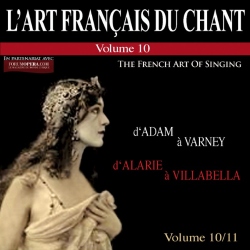
Ballads of François Villon (3), L.119
No. 3, Quoy qu'on tient belles langagières 'Ballade des femmes de Paris'
2:8
Featured Music
2

Ballads of François Villon (3), L.119
Ballade que Villon feit à la requeste de sa mère pour prier Nostre-Dame
4:31
5
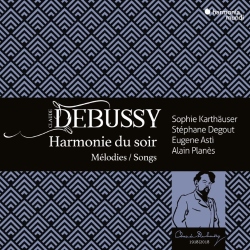
Ballads of François Villon (3), L.119
2. Ballade que Villon feit à la requeste de sa mère pour prier Nostre-Dame
4:29
Main Perform Artists
Baritone (Vocal)
Baritone (Vocal)
Baritone (Vocal)
Baritone Vocal
Soprano (Vocal)
Mezzo-Soprano (Vocal)
Piano