


Johannes Brahms
Liebeslieder Waltzes (18), Op. 52
Released Album
Recent Album
-
-
-

-
-
-
-
 Maestro TimeJuly 16, 2021
 -

-

-

-
 Rudy ApffelJune 30, 2021
 -
Featured Album
Works Info
Composer:Johannes BrahmsGenre:VocalStyle:Song CollectionCompose Date:1868 - 1869Average_duration:23:39Movement_count:18Movement ....Johannes Brahms composed the 'Liebeslieder Waltzes (18), Op. 52' in 1869. The piece premiered on January 15, 1870, in Vienna, Austria. The work consists of 18 short waltzes, each with a duration of around one minute. The waltzes are written for four voices, two pianos, and without any orchestral accompaniment. The 'Liebeslieder Waltzes' are characterized by their romantic and sentimental nature. The lyrics of the waltzes are taken from a collection of love poems by Georg Friedrich Daumer. Brahms set these poems to music, creating a series of waltzes that express the various stages of love, from infatuation to heartbreak. The first movement, "Rede, Mädchen, allzu liebes," sets the tone for the entire work. It is a lively and playful waltz that introduces the theme of love. The second movement, "Am Gesteine rauscht die Flut," is a slower and more contemplative waltz that expresses the longing and yearning of love. The third movement, "O die Frauen," is a humorous and lighthearted waltz that pokes fun at the fickleness of women. The fourth movement, "Wie des Abends schöne Röte," is a melancholic and introspective waltz that reflects on the fleeting nature of love. The fifth movement, "Die grüne Hopfenranke," is a lively and energetic waltz that celebrates the joy and excitement of new love. The sixth movement, "Ein kleiner, hübscher Vogel," is a delicate and tender waltz that expresses the fragility and vulnerability of love. The seventh movement, "Wohl schön bewandt war es," is a nostalgic and sentimental waltz that looks back on a lost love. The eighth movement, "Wenn so lind dein Auge mir," is a passionate and intense waltz that expresses the depth of love. The ninth movement, "Am Donaustrande," is a wistful and dreamy waltz that evokes the beauty and tranquility of nature. The tenth movement, "O wie sanft die Quelle sich," is a gentle and soothing waltz that expresses the peacefulness and serenity of love. The eleventh movement, "Nein, es ist nicht auszukommen," is a dramatic and intense waltz that expresses the pain and anguish of a broken heart. The twelfth movement, "Schlosser auf, und mache Schlösser," is a playful and whimsical waltz that celebrates the joy and freedom of love. The thirteenth movement, "Vögelein durchrauscht die Luft," is a lively and energetic waltz that expresses the exuberance and vitality of love. The fourteenth movement, "Sieh, wie ist die Welle klar," is a serene and peaceful waltz that reflects on the beauty and purity of love. The fifteenth movement, "Labende, softe Lüfte wehen," is a gentle and soothing waltz that expresses the tenderness and affection of love. The sixteenth movement, "Zum Schluss," is a triumphant and celebratory waltz that brings the work to a joyful and satisfying conclusion. Overall, the 'Liebeslieder Waltzes' are a beautiful and expressive work that captures the many facets of love. Brahms' masterful use of harmony, melody, and rhythm creates a rich and varied musical landscape that perfectly complements the romantic and sentimental lyrics.More....
Works Music
Released Music
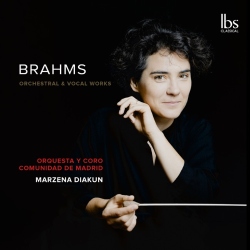
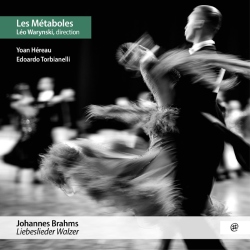

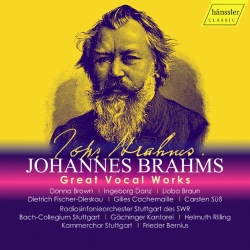
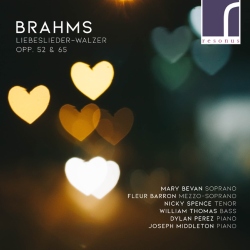




Featured Music

Main Perform Artists
Soprano Vocal
Piano
Piano
Bass Vocal
Tenor Vocal
Soprano Vocal
Piano
Piano
Contralto Vocal
Vocals
Piano
Baritone Vocal
Violin