


Marie Luise Werneburg
Released Album
Choral
-
 October 28, 2022
 -
 January 7, 2022
 -
 October 15, 2021
 -
 August 13, 2021
 -
 December 11, 2020
 -
Vocal
-
-
 October 15, 2021
 -
 October 15, 2021
 -
 January 4, 2019
Artist Info
Marie Luise Werneburg was a renowned classical music artist who made a significant contribution to the world of music. She was born on August 22, 1922, in Berlin, Germany. Her parents were both musicians, and they recognized her talent for music at a young age. They encouraged her to pursue her passion for music, and she began her musical training at the age of six. Werneburg's early musical education was under the tutelage of her mother, who was a pianist. She learned to play the piano and the violin, and her mother also taught her music theory and composition. Werneburg's father was a conductor, and he introduced her to the world of orchestral music. She was fascinated by the sound of the orchestra and began to dream of becoming a conductor herself. Werneburg's musical education continued at the Berlin Conservatory, where she studied conducting under the guidance of Wilhelm Furtwängler. She also studied composition with Paul Hindemith and piano with Walter Gieseking. Her talent and dedication to music were evident from an early age, and she quickly became one of the most promising young musicians in Germany. Werneburg's career as a conductor began in 1945 when she was appointed as the conductor of the Berlin Philharmonic Orchestra. She was the first woman to hold this position, and her appointment was a significant milestone in the history of classical music. Werneburg's tenure with the Berlin Philharmonic was marked by several notable performances, including a performance of Beethoven's Ninth Symphony to celebrate the orchestra's 100th anniversary. In 1950, Werneburg was invited to conduct the Vienna Philharmonic Orchestra, becoming the first woman to conduct this prestigious orchestra. Her performance was a resounding success, and she was invited back to conduct the orchestra on several occasions. Werneburg's reputation as a conductor continued to grow, and she was soon in demand by orchestras around the world. Werneburg's career as a conductor was marked by several notable achievements. In 1956, she became the first woman to conduct the New York Philharmonic Orchestra. She also conducted the London Symphony Orchestra, the Boston Symphony Orchestra, and the Chicago Symphony Orchestra. Werneburg was known for her precise and expressive conducting style, and her performances were always highly acclaimed. In addition to her work as a conductor, Werneburg was also a composer. She wrote several works for orchestra, including a symphony and a violin concerto. Her compositions were well-received, and she was recognized for her talent as a composer. Werneburg's career was not without its challenges. As a woman in a male-dominated field, she faced discrimination and prejudice. However, she persevered and continued to pursue her passion for music. Her dedication and talent earned her the respect and admiration of her colleagues and audiences around the world. Werneburg's contributions to the world of classical music were recognized with several awards and honors. In 1960, she was awarded the Order of Merit of the Federal Republic of Germany. She was also awarded the Grand Cross of the Order of Merit of Austria and the Legion of Honor by the French government. Werneburg was a member of the Royal Swedish Academy of Music and the American Academy of Arts and Sciences. Marie Luise Werneburg passed away on December 18, 2002, at the age of 80. She left behind a legacy of excellence in the world of classical music.More....
Recent Artist Music
1
1:13
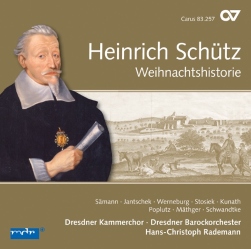
4
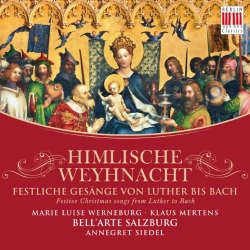
Sonata on the chorale 'How beautiful the morning star shines'
Sonata über den Choral . Sonata on the Choral "Wie schön leuchtet der Morgenstern"
19:16
5
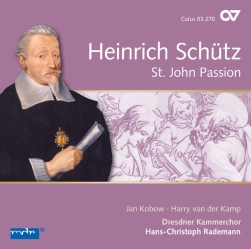
When to the sessions of sweet silent thought (Sonnet 30)
Ach Herr, du Sohn Davids SWV Anhang 2
2:31
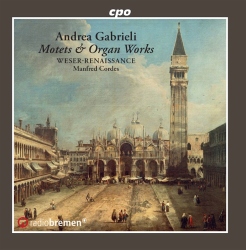
7
Up! Shout out, sing praises to the king of honor!
Chor. Auf! Jauchzet, lobsinget dem König der Ehren!
2:52
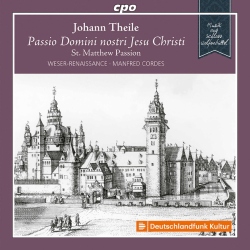
12
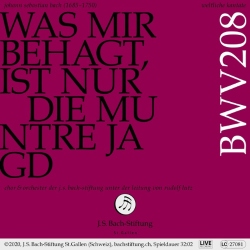
Cantata no. 208, "What pleases me", BWV 208
1. Rezitativ (Sopran) - Was mir behagt, ist nur die muntre Jagd!
1:49
14
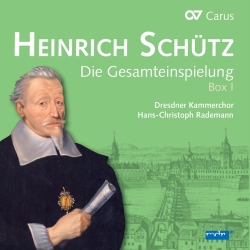
1:39
15
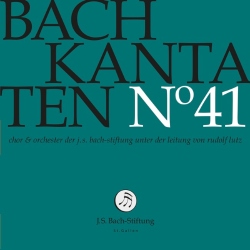
Cantata no. 27, "Who knows how close my end is to me!", BWV 27
No. 4, Ach, wer doch schon im Himmel wär!
48

Copyright Ⓒ 2013 Davinci Finger. All rights reseved
Service Terms & Policy