


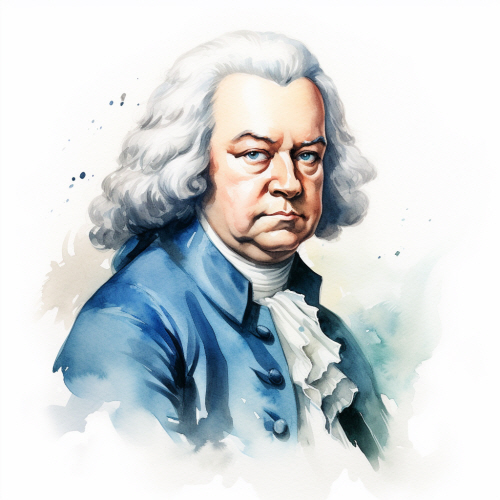
Johann Sebastian Bach
Fugue for organ in G minor, BWV 578
Released Album
Recent Album



Featured Album



Works Info
Composer:Johann Sebastian BachGenre:KeyboardStyle:FugueCompose Date:before 1707Publication Date:1891Average_duration:3:53Johann Sebastian Bach's Fugue for organ in G minor, BWV 578, also known as the "Little Fugue," is a masterpiece of Baroque music. It was composed in the early 18th century, around 1707-1708, during Bach's tenure as the court organist in Weimar, Germany. The piece is one of Bach's most famous and beloved works, and it has been performed and recorded countless times by organists around the world. The Fugue for organ in G minor, BWV 578, is a single-movement work that is structured as a fugue. A fugue is a type of composition in which a main theme, or subject, is introduced and then developed through a series of imitative entries in different voices. In the case of the "Little Fugue," the subject is a short, four-note motif that is introduced in the opening bars of the piece and then repeated and developed throughout the rest of the work. The fugue is divided into four main sections, or voices: the exposition, the development, the recapitulation, and the coda. In the exposition, the subject is introduced in the soprano voice and then imitated in the alto, tenor, and bass voices. The development section features a series of episodes in which the subject is developed and transformed through various harmonic and rhythmic devices. The recapitulation brings back the subject in its original form, and the coda provides a final flourish and resolution to the piece. One of the most striking characteristics of the "Little Fugue" is its use of counterpoint. Counterpoint is the art of combining two or more melodic lines in a way that is harmonically and rhythmically interesting. Bach was a master of counterpoint, and the "Little Fugue" is a prime example of his skill in this area. The piece features a complex interweaving of the four voices, with each voice contributing to the overall texture and harmony of the work. Another notable characteristic of the "Little Fugue" is its use of pedal technique. The pedal is the lowest keyboard on the organ, and it is played with the feet. Bach was known for his innovative use of the pedal, and the "Little Fugue" is a prime example of his skill in this area. The piece features a number of virtuosic pedal passages that require great skill and dexterity on the part of the organist. The "Little Fugue" was not published during Bach's lifetime, and it was not widely known until the 19th century. However, it has since become one of Bach's most popular and beloved works, and it is a staple of the organ repertoire. Its combination of intricate counterpoint, virtuosic pedal technique, and memorable themes has made it a favorite of organists and audiences alike.More....
Works Music
Released Music


Featured Music



Main Perform Artists
Organ
Organ
Organ
Organ
Organ
Organ
Piano
Organ
Organ
Organ
Organ