


Dietrich Buxtehude
Released Album
Keyboard
-
 January 3, 2025
 -
 September 24, 2024
 -
 February 9, 2024
 -
 January 23, 2024
 -
 December 22, 2023
 -
 October 27, 2023
Vocal
-
 February 20, 2024
 -
 November 6, 2020
 -
-
 April 24, 2020
 -
Choral
-
-
-
 May 10, 2024
 -
 July 19, 2023
 -
 May 20, 2022
 -
 February 25, 2022
Chamber
-
-
 November 17, 2023
 -
 October 13, 2023
 -
 September 24, 2021
 -
 September 3, 2021
 -
Artist Info
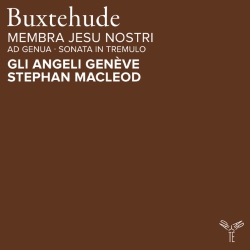
Role:ComposerCountry: GermanyBirth:ca. 1637 in Helsingborg, SwedenDeath:May 9, 1707 in Lübeck, GermanyPeriod:BaroqueGenre:KeyboardDietrich Buxtehude was a German-Danish composer and organist who lived from 1637 to 1707. He was born in Helsingborg, Sweden, to a family of musicians. His father, Johannes Buxtehude, was an organist and his mother, Anna Tunder, was a singer. Buxtehude grew up in a musical environment and received his early musical training from his father. In 1657, Buxtehude moved to Lübeck, Germany, where he became the organist at the Marienkirche. He held this position for the rest of his life and became one of the most respected and influential musicians of his time. Buxtehude was known for his virtuosic organ playing and his innovative compositions. Buxtehude's music was highly regarded by his contemporaries and had a significant influence on later composers, including Johann Sebastian Bach. Buxtehude's compositions were characterized by their complexity and emotional depth. He was particularly known for his vocal music, including his cantatas and oratorios. One of Buxtehude's most famous works is his Membra Jesu Nostri, a cycle of seven cantatas that focus on the various parts of Christ's body that were crucified. Each cantata is dedicated to a different part of the body, such as the feet, knees, and hands. The work is notable for its use of chromaticism and its emotional intensity. Another notable work by Buxtehude is his Passacaglia in D minor for organ. This piece is one of the most famous works in the organ repertoire and is known for its virtuosic demands on the performer. The Passacaglia is built around a repeating bass line that is varied and developed throughout the piece. Buxtehude's music was also notable for its use of counterpoint and its exploration of different tonalities. He was known for his use of dissonance and chromaticism, which gave his music a unique and expressive quality. In addition to his work as a composer, Buxtehude was also a respected organist and teacher. He was known for his improvisational skills and his ability to create complex and virtuosic organ works on the spot. He also taught a number of students, including Johann Mattheson and Georg Friedrich Händel. Buxtehude's legacy as a composer and musician has continued to influence musicians to this day. His innovative compositions and virtuosic organ playing have made him one of the most important figures in the history of classical music.More....
Recent Artist Music
4
39
5
3:1
6
3:9
8
5:22
9
58
11
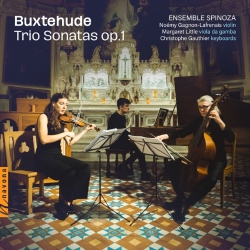
Sonatas (7) for 2 violins, viola da gamba & harpsichord, Op. 1, BuxWV 252-258
No. 1 F Major , BuxWV 252
9:42
12
1:5
13
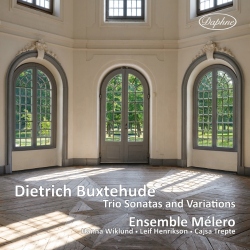
1:42
14
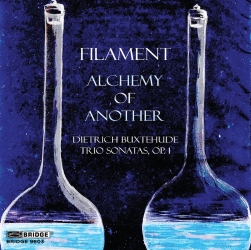
22
Works Highlight






Related Artists
Copyright Ⓒ 2013 Davinci Finger. All rights reseved
Service Terms & Policy