


Béla Bartók
Released Album
Keyboard
-
 September 25, 2024
 -
 September 20, 2024
 -
 August 17, 2024
 -
 August 16, 2024
 -
 July 19, 2024
 -
Chamber
-
-
 June 28, 2024
 -
 June 28, 2024
 -
 May 10, 2024
 -
-
 March 15, 2024
Concerto
-
-
 December 14, 2023
 -
 October 6, 2023
 -
 May 19, 2023
 -
 March 3, 2023
 -
Orchestral
-
-
-
-
 March 19, 2024
 -
-
Artist Info
Role:ComposerCountry: HungaryBirth:March 25, 1881 in Nagyszentmiklós, HungaryDeath:September 26, 1945 in New York City, NYPeriod:ContemporaryModernGenre:ConcertoKeyboardOrchestralBéla Bartók was a Hungarian composer and pianist who is widely regarded as one of the most important composers of the 20th century. He was born on March 25, 1881, in Nagyszentmiklós, Hungary (now Sânnicolau Mare, Romania), to a family of musicians. His father, Béla Sr., was a schoolteacher and amateur musician, while his mother, Paula, was a talented pianist. Bartók showed an early aptitude for music and began piano lessons at the age of five. He quickly progressed and began composing his own music by the age of nine. In 1899, he enrolled at the Royal Academy of Music in Budapest, where he studied piano and composition. He graduated in 1903 with a degree in piano performance. After graduation, Bartók began working as a piano teacher and composer. He quickly gained a reputation as a talented composer and pianist, and his music began to be performed throughout Hungary. In 1905, he met the composer Zoltán Kodály, with whom he would form a lifelong friendship and collaboration. Bartók's early works were heavily influenced by the music of Johannes Brahms and Richard Strauss, but he soon began to develop his own unique style. He was particularly interested in the folk music of Hungary and other Eastern European countries, and he began to incorporate these influences into his compositions. In 1908, Bartók began a series of field trips to collect and study folk music. He traveled throughout Hungary, Romania, and Slovakia, recording and transcribing traditional songs and dances. These trips had a profound impact on his music, and he began to incorporate folk melodies and rhythms into his compositions in a more systematic way. Bartók's breakthrough work was the ballet The Wooden Prince, which he composed between 1914 and 1917. The ballet was based on a fairy tale and featured a large orchestra and complex choreography. It was a critical and popular success, and it established Bartók as one of the leading composers of his generation. During World War I, Bartók served in the Austro-Hungarian army as a stretcher-bearer. He was deeply affected by the war and its aftermath, and his music became more introspective and somber. He composed several works during this period, including the Sonata for Violin and Piano and the String Quartet No. 1. In the 1920s, Bartók's music became more experimental and avant-garde. He began to incorporate elements of atonality and dissonance into his compositions, and he developed a new system of harmony based on the interval of the fifth. He also continued to explore folk music, and he composed several works based on traditional Hungarian and Romanian melodies. Bartók's most famous work from this period is the Concerto for Orchestra, which he composed in 1943. The work is a showcase for the different sections of the orchestra, and it features complex rhythms and harmonies. It is widely regarded as one of the greatest orchestral works of the 20th century. In addition to his work as a composer, Bartók was also a respected musicologist and ethnomusicologist. He published several books on folk music and collected thousands of traditional songs and dances. His work in this field had a profound influence on the study of folk music and the development of ethnomusicology as a discipline. Bartók's later years were marked by illness and financial difficulties. He was diagnosed with leukemia in 1940, and his health deteriorated rapidly.More....
Recent Artist Music
2
4:8
3
5:20
4
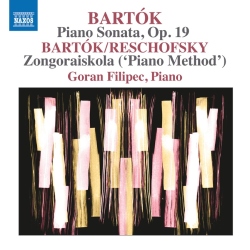
Piano Method, teaching pieces (50) for piano by Bartók and Sergei Reschofsky (Bartók's 18 pieces identical to "The First Term")
Legato and Non-legato Exercises: No. 8. (Quarter note = 96)
13
8
16:1
13
For Children (85) without octaves in 4 volumes for piano, No. 42
I. Children at play - Let’s bake something delicious. Allegro
31


Works Highlight
Recommend Playlist

















Related Artists
Copyright Ⓒ 2013 Davinci Finger. All rights reseved
Service Terms & Policy