


Karl Elmendorff
Released Album
Opera
-
-
 March 18, 2013
 -
 January 11, 2011
 -
 April 4, 2010
 -
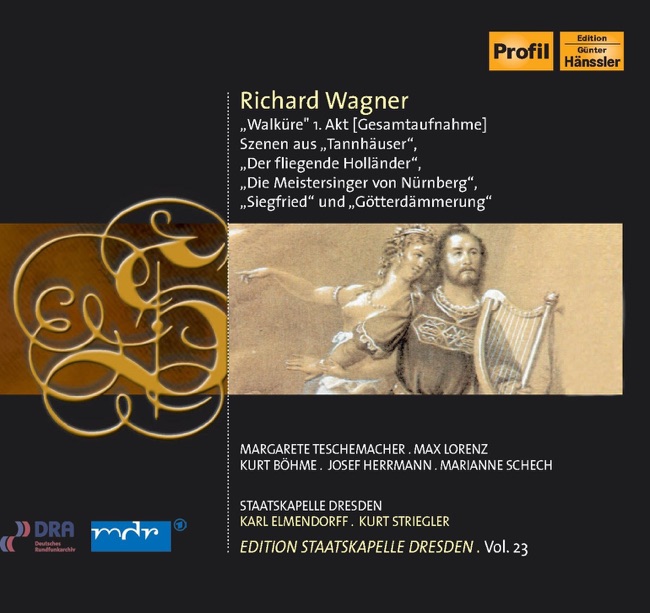 April 28, 2009
 -
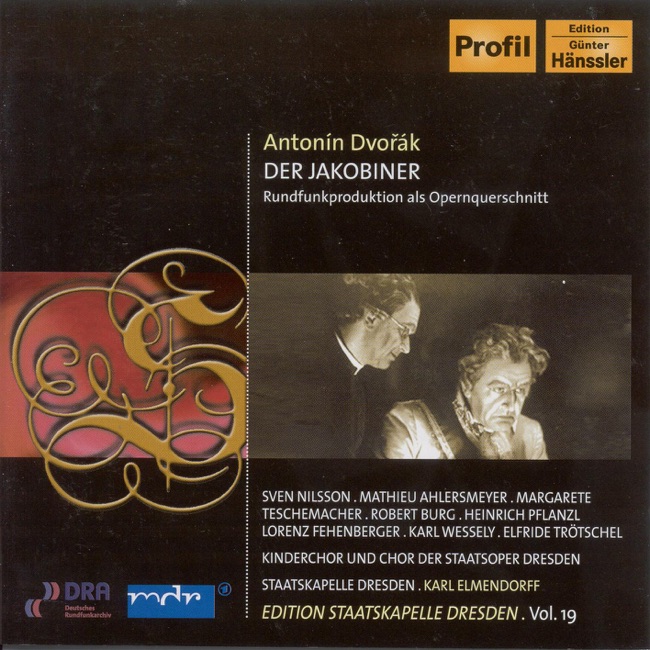
Orchestral
Artist Info
Role:ConductorBirth:October 25, 1891 in Düsseldorf, GermanyDeath:October 21, 1962 in Hofheim am Taunus, GermanyGenre:OperaKarl Elmendorff was a renowned German conductor and pianist who made significant contributions to the world of classical music. He was born on September 25, 1891, in Frankfurt, Germany, to a family of musicians. His father was a conductor, and his mother was a singer. From a young age, Elmendorff showed a keen interest in music and began taking piano lessons at the age of six. Elmendorff's musical talent was evident from an early age, and he quickly became a skilled pianist. He studied at the Hoch Conservatory in Frankfurt, where he received training in piano, composition, and conducting. He also studied with renowned pianist and composer Ferruccio Busoni, who had a significant influence on his musical development. In 1912, Elmendorff made his debut as a conductor, leading the Frankfurt Opera in a performance of Mozart's "The Marriage of Figaro." He quickly gained a reputation as a talented conductor and was appointed as the principal conductor of the Frankfurt Opera in 1919. During his tenure, he conducted a wide range of operas, including works by Mozart, Wagner, and Verdi. In 1922, Elmendorff was appointed as the principal conductor of the Berlin State Opera, one of the most prestigious opera companies in the world. He remained in this position until 1933, conducting numerous performances of operas by Wagner, Strauss, and other composers. He also conducted the Berlin Philharmonic Orchestra, one of the world's leading orchestras, and was highly regarded for his interpretations of the works of Beethoven, Brahms, and other classical composers. Elmendorff's career was interrupted by the rise of the Nazi regime in Germany. As a Jew, he was forced to flee the country in 1933 and emigrated to the United States. He settled in New York City and continued to conduct, working with the Metropolitan Opera, the New York Philharmonic, and other prominent orchestras. In 1942, Elmendorff became a naturalized citizen of the United States and joined the faculty of the Juilliard School, where he taught conducting and piano. He also continued to conduct, leading performances with the New York City Opera, the Philadelphia Orchestra, and other ensembles. Throughout his career, Elmendorff received numerous awards and honors for his contributions to classical music. In 1951, he was awarded the Order of Merit of the Federal Republic of Germany, one of the country's highest honors. He was also awarded the Goethe Medal, the highest honor bestowed by the German government for contributions to the arts and sciences. Elmendorff's legacy as a conductor and pianist continues to be celebrated today. His recordings of Beethoven's symphonies and other classical works are still highly regarded, and his influence on the world of classical music is widely recognized. He died on December 13, 1962, in New York City, leaving behind a rich legacy of musical excellence.More....
Recent Artist Music
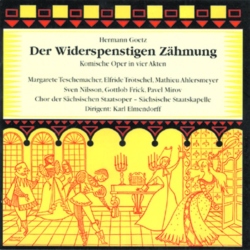

Related Artists
Copyright Ⓒ 2013 Davinci Finger. All rights reseved
Service Terms & Policy