Béla Bartók
Hungarian Folksongs from Csík (3), Sz. 35a
Released Album
Recent Album




Featured Album



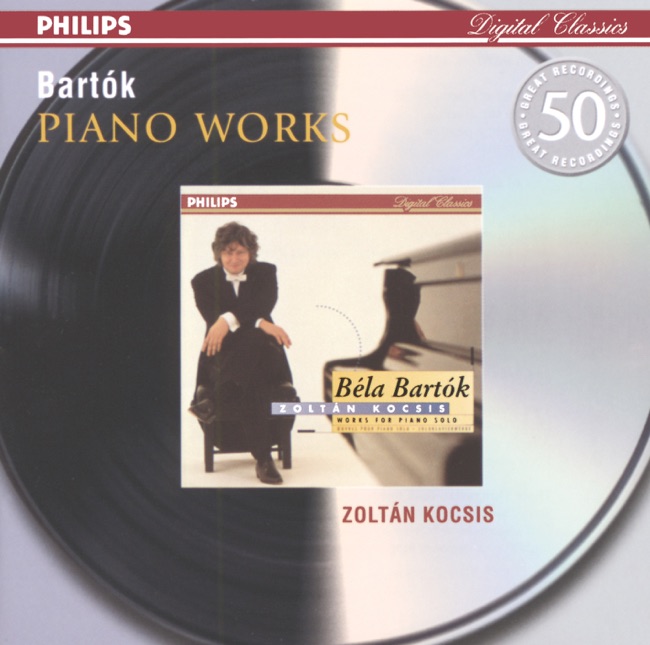
Works Info
Composer:Béla BartókGenre:KeyboardStyle:KeyboardCompose Date:1907Average_duration:3:36Movement_count:3Movement ....Béla Bartók's 'Hungarian Folksongs from Csík (3)', also known as 'Three Hungarian Folksongs from Csík', is a composition for solo piano. It was composed in 1917 and premiered in Budapest in the same year. The piece consists of three movements, each based on a traditional Hungarian folksong from the Csík region of Transylvania. The first movement, 'Rubato', is a slow and melancholic piece that captures the mournful quality of the original folksong. Bartók's use of rubato, or flexible tempo, adds to the expressive nature of the piece. The melody is presented in the right hand, while the left hand provides a simple accompaniment. The second movement, 'Poco rubato', is more lively and rhythmic than the first. It features a syncopated melody in the right hand, accompanied by a driving rhythm in the left hand. The use of dissonance and irregular phrasing adds to the folk-like quality of the piece. The final movement, 'Allegro vivace', is a fast and energetic piece that showcases Bartók's virtuosic piano writing. The melody is presented in a series of rapid-fire arpeggios, while the left hand provides a driving bass line. The use of syncopation and irregular rhythms adds to the lively and playful nature of the piece. Overall, 'Hungarian Folksongs from Csík (3)' is a prime example of Bartók's interest in folk music and his ability to incorporate traditional melodies and rhythms into his own compositions. The piece is characterized by its expressive melodies, rhythmic vitality, and use of dissonance and irregular phrasing.More....
Works Music
Released Music

4
1:18
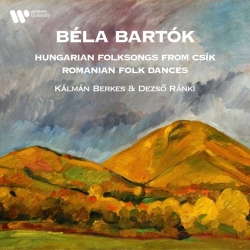


Featured Music


7
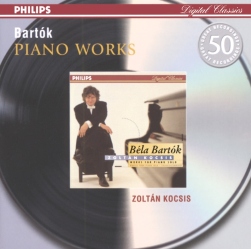
Hungarian Folksongs from Csík (3), Sz. 35th
3 Hungarian Folksongs from the Csìk District, BB 45b, Sz. 35a
3:18
8
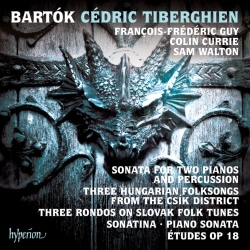
1:42
10
50