


Stefan Wolpe
Released Album
Chamber
-
 February 16, 2024
 -
 September 8, 2017
 -
 June 2, 2015
 -
-
 August 1, 2010
 -
 April 3, 2007
Keyboard
-
 April 12, 2019
 -
 November 18, 2016
 -
 August 5, 2016
 -
-
 December 10, 2013
 -
 December 11, 2012
Vocal
-
 April 7, 2008
 -

-
Choral
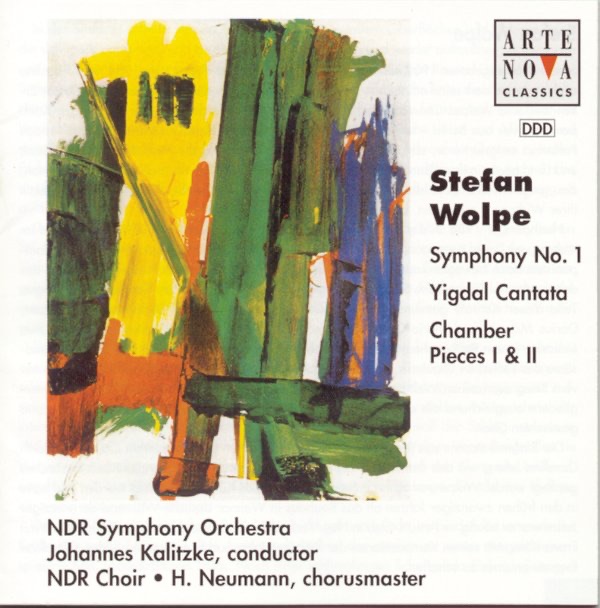
Artist Info
Role:ComposerCountry: GermanyBirth:August 25, 1902 in Berlin, GermanyDeath:April 4, 1972 in New York City, NYPeriod:ContemporaryModernGenre:ChamberKeyboardVocalStefan Wolpe was a German-born American composer known for his contributions to the development of modernist music in the mid-20th century. He was born on August 25, 1902, in Berlin, Germany, to a Jewish family. Wolpe showed an early interest in music and began studying piano and composition at a young age. He was also exposed to the avant-garde art movements of the time, which would later influence his musical style. In 1920, Wolpe enrolled at the Berlin Conservatory, where he studied composition with Franz Schreker and piano with Artur Schnabel. He also became involved with the Berlin Dada movement, which was known for its experimental and anti-establishment art. Wolpe's early compositions reflected this influence, with works such as his "Dadaist Suite" for piano and his "Ensemble Piece" for chamber ensemble. In 1928, Wolpe moved to Vienna to study with Anton Webern, one of the leading figures of the Second Viennese School. Under Webern's tutelage, Wolpe developed a more rigorous approach to composition, focusing on the use of serialism and other modernist techniques. He also became involved with the Austrian Communist Party, which would later lead to his exile from Europe. In 1933, Wolpe fled Germany for Palestine, where he worked as a composer and music teacher. He became involved with the Palestine Symphony Orchestra and the New Palestine Orchestra, both of which were dedicated to promoting Jewish and Palestinian music. During this time, Wolpe's compositions began to reflect his interest in Jewish and Middle Eastern music, as well as his growing political consciousness. In 1938, Wolpe moved to New York City, where he continued to compose and teach. He became involved with the American Composers Alliance and the League of Composers, both of which were dedicated to promoting modernist music in the United States. Wolpe's compositions during this time reflected his interest in serialism and other modernist techniques, as well as his growing interest in jazz and other popular music. Some of Wolpe's most notable works from this period include his "Symphony No. 1" (1942), his "Chamber Piece No. 1" (1946), and his "Piece for Trumpet and Ten Instruments" (1950). These works are characterized by their complex rhythms, dissonant harmonies, and use of serialism and other modernist techniques. In the 1950s, Wolpe began to experiment with new forms and techniques, including aleatoric music and graphic notation. He also became interested in electronic music and collaborated with the Columbia-Princeton Electronic Music Center. Some of his notable works from this period include his "Piece in Two Parts for Four Pianos" (1952), his "Piece for Fourteen Players" (1955), and his "Piece for Oboe and Piano" (1956). Wolpe continued to compose and teach until his death on April 4, 1972, in New York City. His contributions to modernist music have been recognized by scholars and musicians alike, and his works continue to be performed and studied today.More....
Recent Artist Music

2
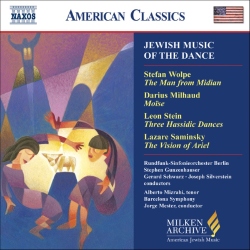
The Man from Midian, ballet suite for orchestra, C. 98
3. Pharaoh's Daughter Bathes in the Nile, Finds the Baby
2:16


5
3:20
9

6:22





Copyright Ⓒ 2013 Davinci Finger. All rights reseved
Service Terms & Policy