


George Perle
Released Album
Chamber
-
 January 21, 2022
 -
 October 30, 2020
 -
 October 8, 2019
 -
 July 9, 2013
 -
-
 November 8, 2011
Keyboard
-
 July 8, 2014
 -
 May 13, 2014
 -
 September 24, 2002
 -
 January 1, 2002
 -
 May 29, 2001
 -
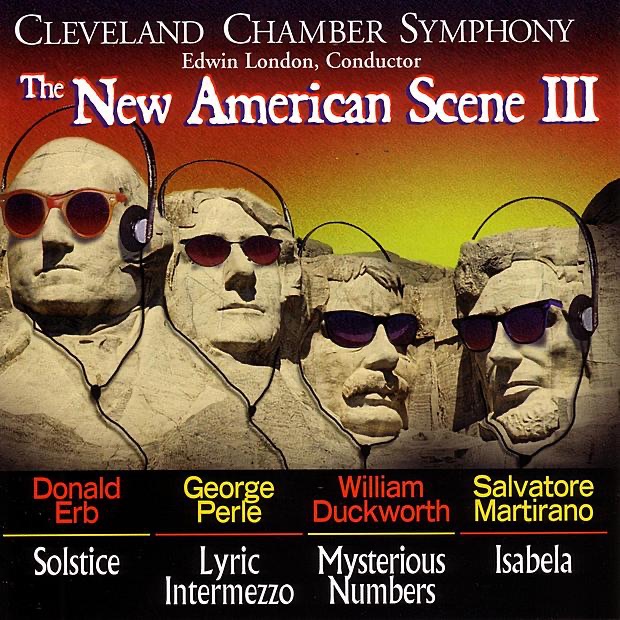 August 24, 1999
Concerto
-
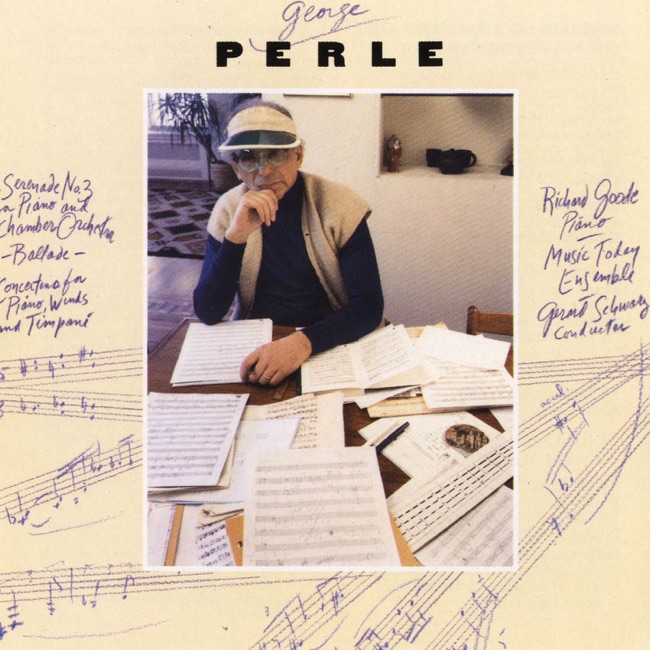 May 28, 1992

Artist Info
Role:ComposerCountry: United States of AmericaBirth:May 6, 1915 in Bayonne, NJDeath:January 23, 2009 in New York City, NYPeriod:ContemporaryModernGenre:ChamberConcertoKeyboardGeorge Perle was an American composer and music theorist who was born on May 6, 1915, in Bayonne, New Jersey. He was the youngest of three children born to Jewish immigrants from Austria-Hungary. His father was a businessman, and his mother was a homemaker who loved music and encouraged her children to pursue it. Perle began playing the piano at a young age and showed an early talent for music. He studied piano with a local teacher and later with a Russian émigré named Isidor Philipp. He also studied composition with Wallingford Riegger, a prominent American composer of the time. In 1938, Perle graduated from the DePaul University School of Music in Chicago with a degree in composition. He then moved to New York City, where he studied with the composer Ernst Krenek and the music theorist Felix Salzer at the New School for Social Research. During World War II, Perle served in the U.S. Army Signal Corps, where he worked as a radio operator and a composer of music for propaganda films. After the war, he returned to New York City and began a career as a composer and music theorist. Perle's music is characterized by its use of serialism, a compositional technique that involves organizing musical elements such as pitch, rhythm, and dynamics into a predetermined order. He was one of the leading proponents of serialism in the United States and was known for his innovative use of the technique. Perle's early works, such as his String Quartet No. 1 (1946) and his Sonata for Piano (1947), were influenced by the music of Arnold Schoenberg, the Austrian composer who is considered the father of serialism. However, Perle soon developed his own unique style, which was characterized by its use of complex rhythms, intricate harmonies, and a sense of lyricism. One of Perle's most important works is his Wind Quintet No. 1 (1957), which was commissioned by the Chamber Music Society of Lincoln Center. The piece is notable for its use of a twelve-tone row that is divided into three groups of four notes each. Perle uses this row to create a complex web of interlocking rhythms and harmonies that give the piece a sense of energy and momentum. Another important work by Perle is his Concerto for Piano and Orchestra (1965), which was commissioned by the Boston Symphony Orchestra. The piece is notable for its use of a twelve-tone row that is divided into two groups of six notes each. Perle uses this row to create a series of variations that explore the different possibilities of the row. Perle's music was widely performed during his lifetime, and he received numerous awards and honors for his work. In 1986, he was awarded the Pulitzer Prize for Music for his Wind Quintet No. 4 (1984). He was also a member of the American Academy of Arts and Letters and the American Academy of Arts and Sciences. In addition to his work as a composer, Perle was also a respected music theorist. He wrote several books on music theory, including Serial Composition and Atonality: An Introduction to the Music of Schoenberg, Berg, and Webern (1962) and Twelve-Tone Tonality (1977). His work as a theorist was highly influential and helped to shape the development of serialism in the United States. Perle died on January 23, 2009, in New York City at the age of 93. He left behind a legacy of innovative and influential music that continues to be performed and studied today.More....
Recent Artist Music


15
25:50
Copyright Ⓒ 2013 Davinci Finger. All rights reseved
Service Terms & Policy