


Wolfgang Unger
Released Album
Choral
-
 November 24, 2017
 -

-
 September 9, 2013
 -
 September 2, 2008
 -
 January 10, 2008
 -
 January 23, 2001
Chamber
-
 October 7, 2016
Artist Info
Role:ConductorPeriod:BaroqueModernGenre:ChoralWolfgang Unger was a renowned classical music artist who made significant contributions to the world of music. He was born on August 22, 1924, in Berlin, Germany. Unger's parents were both musicians, and they encouraged him to pursue music from a young age. He began playing the piano at the age of four and showed exceptional talent. Unger's family moved to Vienna, Austria, when he was six years old, and he continued his music education there. He studied under the tutelage of renowned pianist and composer, Franz Schmidt, at the Vienna Academy of Music. Unger's talent and dedication to music were evident from an early age, and he quickly became one of Schmidt's most promising students. In 1942, Unger was drafted into the German army and served as a medic on the Eastern Front during World War II. He was captured by the Soviet army in 1945 and spent several years as a prisoner of war. During his captivity, Unger continued to play the piano and even gave concerts for his fellow prisoners. After his release from captivity, Unger returned to Vienna and resumed his music studies. He completed his education at the Vienna Academy of Music and graduated with honors in 1949. Unger then began his career as a concert pianist, performing in Austria and Germany. In 1951, Unger won first prize at the International Piano Competition in Geneva, Switzerland. This was a significant achievement for Unger, as the competition was highly competitive and attracted some of the world's most talented pianists. Unger's win at the competition helped to establish him as a rising star in the world of classical music. Over the next few years, Unger continued to perform in Europe and gained a reputation as a virtuoso pianist. He was known for his technical skill and his ability to bring emotion and depth to his performances. Unger's repertoire included works by some of the greatest composers in history, including Beethoven, Mozart, and Chopin. In 1956, Unger made his debut in the United States, performing at Carnegie Hall in New York City. The concert was a huge success, and Unger received rave reviews from critics and audiences alike. He went on to perform in other major cities in the US, including Boston, Chicago, and Los Angeles. Unger's success in the US helped to establish him as an international star. He continued to perform in Europe and the US, and his concerts were always well-received. Unger's performances were known for their technical precision and emotional depth, and he was considered one of the greatest pianists of his time. In addition to his career as a concert pianist, Unger was also a respected music educator. He taught at the Vienna Academy of Music and the Salzburg Mozarteum, and his students included some of the most talented young pianists of the time. Unger's contributions to the world of classical music were recognized with numerous awards and honors. In 1964, he was awarded the Austrian Cross of Honor for Science and Art, and in 1974, he was awarded the Grand Decoration of Honor in Gold for Services to the Republic of Austria. Unger was also a member of the Vienna Philharmonic Orchestra and was awarded the title of Honorary Member in 1984. Unger continued to perform and teach until his death on December 5, 1991, in Vienna, Austria. He left behind a legacy as one of the greatest pianists of his time and a respected music educator. Unger's contributions to the world of classical music will always be remembered and celebrated.More....
Recent Artist Music
2
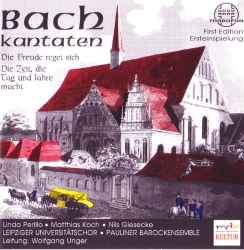
Cantata no. 36, "Swing up joyfully", BWV 36
"Willkommen, wlldommen, werter Schatz!", Aria for bass
3:1
4
4:25
10
4:11
13

3:11
Copyright Ⓒ 2013 Davinci Finger. All rights reseved
Service Terms & Policy