


Johann Adolf Hasse
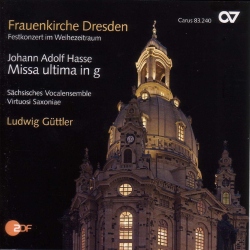
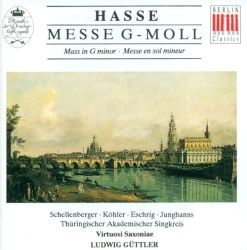
Mass in G minor
Released Album
Recent Album
Works Info
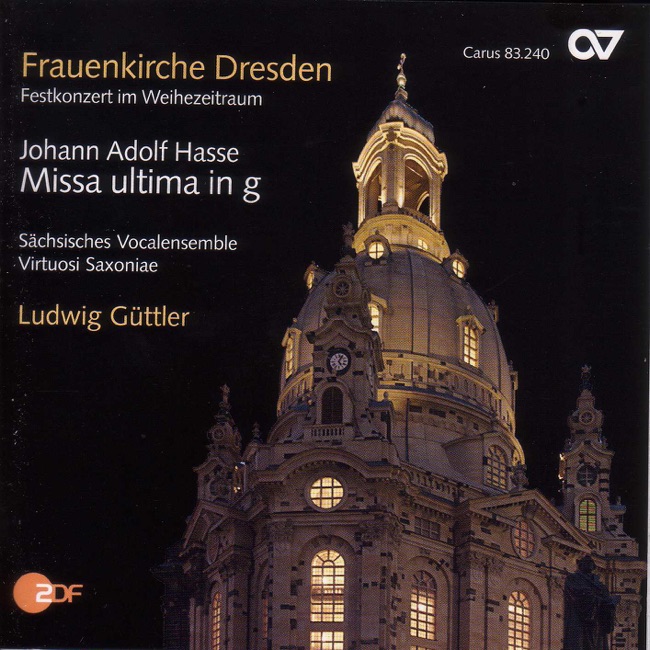
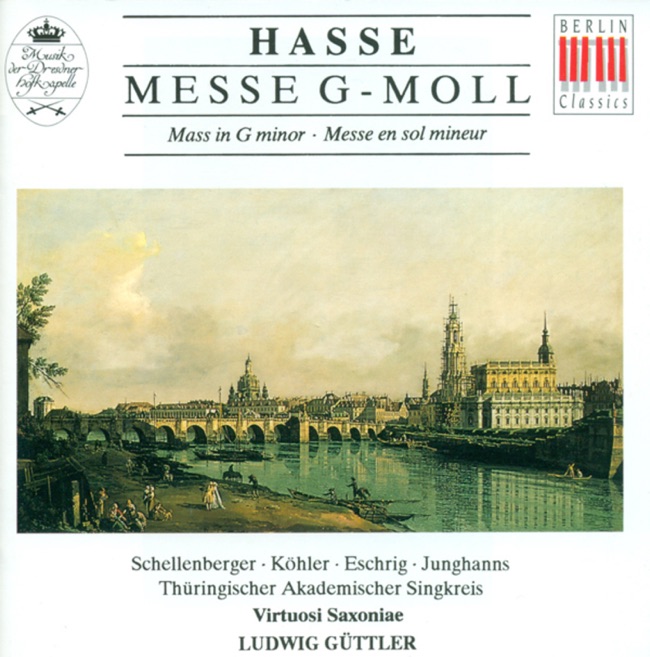
Composer:Johann Adolf HasseGenre:ChoralStyle:MassAverage_duration:63:27Johann Adolf Hasse's Mass in G minor, also known as Missa in G minor, is a sacred choral work composed in the late Baroque era. It was written in 1751 and premiered in Dresden, Germany, where Hasse served as the court composer for the Elector of Saxony. The Mass is divided into six movements: Kyrie, Gloria, Credo, Sanctus, Benedictus, and Agnus Dei. The Mass in G minor is characterized by its grandeur and complexity, with intricate choral and orchestral parts that showcase Hasse's skill as a composer. The Kyrie begins with a solemn choral introduction, followed by a fugue that builds in intensity before resolving into a peaceful conclusion. The Gloria is a joyful and celebratory movement, with lively choral and instrumental parts that convey a sense of exultation. The Credo is the longest movement of the Mass, and it is divided into several sections that reflect the different articles of faith. It begins with a majestic choral introduction, followed by a series of solos and duets that express the various beliefs of the Catholic Church. The Sanctus is a bright and uplifting movement, with soaring choral parts and a lively instrumental accompaniment. The Benedictus is a brief movement that features a duet between two soloists, accompanied by a gentle orchestral accompaniment. The Agnus Dei is a solemn and contemplative movement, with a plaintive choral melody that expresses the supplication of the faithful. Overall, the Mass in G minor is a masterful work that showcases Hasse's skill as a composer and his deep understanding of the sacred music tradition. Its intricate choral and orchestral parts, combined with its grandeur and complexity, make it a powerful and moving work that continues to be performed and admired today.More....
Works Music
Released Music
Main Perform Artists