


Guillaume de Machaut
Released Album
Vocal
-
 October 13, 2023
 -
 July 28, 2023
 -
 November 4, 2022
 -
 February 18, 2022
 -
 January 8, 2021
 -
 September 4, 2020
Choral
-
 September 13, 2019
 -
 May 24, 2019
 -
 October 19, 2018
 -
 August 25, 2017
 -
 February 10, 2017
 -
 April 29, 2016
Miscellaneous
-
 August 11, 2003
Artist Info
Role:ComposerCountry: FranceBirth:ca. 1300 in Machaut, FranceDeath:April 13, 1377 in Rheims, FrancePeriod:MedievalGenre:ChoralVocalGuillaume de Machaut was a French composer and poet who lived from around 1300 to 1377. He is considered one of the most important composers of the 14th century, and his works had a significant influence on the development of Western music. Machaut was born in the Champagne region of France, and little is known about his early life. He likely received a good education, as he was fluent in Latin and wrote extensively in both French and Latin. He also had a strong interest in music from a young age, and he may have received some formal training in music as well. Machaut's career as a musician began in earnest when he entered the service of John of Luxembourg, King of Bohemia, in 1323. John was a patron of the arts, and he employed Machaut as a secretary and musician. Machaut traveled extensively with John, and he likely had the opportunity to meet and work with other musicians and composers during this time. Machaut's earliest surviving works date from the 1330s, and they include both secular and sacred music. His secular works include chansons, ballades, and rondeaux, which were popular forms of French poetry set to music. These works are notable for their complex polyphonic textures and sophisticated harmonies, which were groundbreaking for their time. Machaut's sacred music includes masses, motets, and hymns, which were composed for use in the church. These works are characterized by their use of plainchant melodies, which were often elaborated and embellished with complex polyphony. Machaut's masses in particular are notable for their use of isorhythm, a technique in which a repeating rhythmic pattern is used throughout a piece. Machaut's most famous work is the Messe de Nostre Dame, a setting of the Ordinary of the Mass that was composed around 1360. This work is notable for its use of a single melody, which is used as the basis for all of the movements of the mass. The Messe de Nostre Dame is considered a masterpiece of medieval music, and it had a significant influence on the development of Western music in the centuries that followed. In addition to his music, Machaut was also a prolific poet. He wrote in both French and Latin, and his poetry was highly regarded in his own time. His poetry often dealt with themes of love and courtly romance, and it was characterized by its use of complex rhyme schemes and intricate wordplay. Machaut's influence on later composers was significant. His use of complex polyphony and sophisticated harmonies paved the way for the development of Renaissance music, and his use of isorhythm was an important precursor to the use of rhythmic patterns in later music. His poetry also had a significant influence on later writers, including Geoffrey Chaucer. Machaut died in 1377, and he was buried in the cathedral of Reims. His legacy as a composer and poet has endured to the present day, and his works continue to be performed and studied by musicians and scholars around the world.More....
Recent Artist Music

12
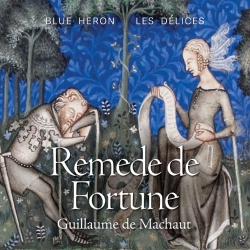
Hareu, hareu, fire/Helas, ou sera/Obediens usque ad mortem
Motet (M10) Hareu, hareu! / Helas! ou sera pris confors / Obediens usque ad mortem
1:57
13
1:19
15

1:53


Copyright Ⓒ 2013 Davinci Finger. All rights reseved
Service Terms & Policy