


Pierre Cochereau
Released Album
Keyboard
-
 October 1, 2021
 -
 June 1, 2015
 -
 May 12, 2015
 -
 April 20, 2015
 -
 April 13, 2014
 -
 April 13, 2010
Miscellaneous
-
 April 11, 2017
 -
Symphony
-
 June 10, 2016
 -
 January 1, 2014
 -
 November 9, 1993
Artist Info
Role:ComposerCountry: FranceBirth:July 9, 1924 in St. Mandé, Val-de-MarneDeath:March 6, 1984 in Lyon, FrancePeriod:ContemporaryGenre:KeyboardPierre Cochereau was a French composer, organist, and improviser who was born on July 9, 1924, in Saint-Mandé, France. He was the son of a church organist and began playing the piano at a young age. Cochereau's father recognized his son's musical talent and encouraged him to pursue a career in music. Cochereau began his formal music education at the Paris Conservatory, where he studied under Marcel Dupré. He quickly became known for his exceptional talent as an organist and improviser. In 1946, he won the prestigious Prix de Rome, which allowed him to study in Italy for several years. After returning to France, Cochereau became the organist at the Church of Saint-Eustache in Paris, a position he held for over 30 years. He also served as the organist at Notre-Dame Cathedral in Paris from 1955 until his death in 1984. Cochereau was known for his improvisational skills, which he often demonstrated during his performances. He was particularly skilled at improvising on the organ, and his performances were often described as breathtaking and awe-inspiring. Cochereau's improvisations were so impressive that they were often recorded and released as albums. In addition to his improvisational skills, Cochereau was also a prolific composer. He wrote a number of works for the organ, including several suites and preludes. His compositions were known for their complexity and technical difficulty, and they were often performed by other organists around the world. One of Cochereau's most famous works is his Suite for Organ, which was composed in 1956. The suite consists of five movements, each of which is based on a different theme. The first movement, titled "Prelude," is a fast-paced and energetic piece that showcases Cochereau's technical skill on the organ. The second movement, "Sarabande," is a slower and more contemplative piece that features a haunting melody. The third movement, "Toccata," is a virtuosic piece that is often used as a showpiece for organists. The fourth movement, "Choral," is a simple and beautiful piece that is based on a traditional hymn. The final movement, "Final," is a triumphant and celebratory piece that brings the suite to a thrilling conclusion. Cochereau's other notable works include his Prelude and Fugue in B Major, his Variations on a Theme by Paganini, and his Fantasia on "Adeste Fideles." All of these works showcase Cochereau's technical skill and his ability to create complex and beautiful compositions. In addition to his work as a composer and organist, Cochereau was also a respected teacher. He taught at the Paris Conservatory and mentored many young musicians throughout his career. His students included Olivier Latry, who would later become the organist at Notre-Dame Cathedral after Cochereau's death. Cochereau's career was cut short when he died suddenly of a heart attack in 1984. He was only 60 years old at the time of his death. However, his legacy as a composer, organist, and improviser lives on. His recordings and compositions continue to inspire and amaze musicians and music lovers around the world. Cochereau's contributions to the world of classical music are truly remarkable, and his influence will be felt for generations to come.More....
Recent Artist Music
2
6:47
4
1:49
5
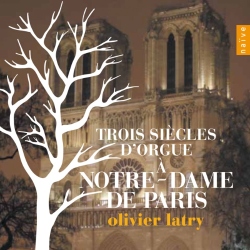
Bolero on a Charles Racquet theme
Boléro sur un thème de Charles Racquet, pour grand orgue et percussions
12:43
10
2:5
15

15:51
Copyright Ⓒ 2013 Davinci Finger. All rights reseved
Service Terms & Policy