Matthias Weckmann
Sonata à 4, No. 9
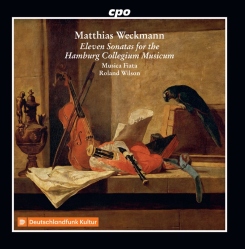
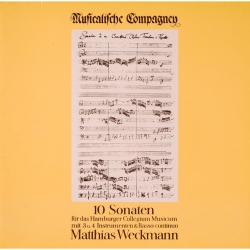
Released Album
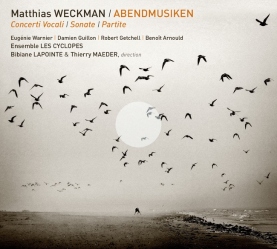
Recent Album
Works Info
Composer:Matthias WeckmannGenre:ChamberStyle:SonataAverage_duration:6:13Matthias Weckmann was a German composer and organist of the Baroque era. He was born in Thuringia in 1616 and died in Hamburg in 1674. He was a student of Heinrich Schütz and worked as an organist in Dresden, Nuremberg, and Hamburg. He is known for his vocal and instrumental music, which is characterized by its expressive harmonies and virtuosic keyboard writing. One of Weckmann's most famous works is the Sonata à 4, No. 9. This piece was composed for four instruments, two violins, viola, and basso continuo. It is believed to have been composed in the 1660s, during Weckmann's time in Hamburg. The piece is in four movements, each with its own distinct character and mood. The first movement is marked "Preludio" and is in a fast tempo. It begins with a lively and rhythmic theme played by the violins, which is then taken up by the viola and basso continuo. The music is characterized by its energetic rhythms and virtuosic violin writing. The second movement is marked "Allemande" and is in a moderate tempo. It is a dance-like movement, with a flowing melody played by the violins and viola. The basso continuo provides a steady pulse, while the violins and viola weave intricate counterpoint around the melody. The third movement is marked "Courante" and is in a fast tempo. It is another dance-like movement, with a lively and syncopated rhythm. The violins and viola play intricate melodies and counterpoint, while the basso continuo provides a driving pulse. The final movement is marked "Sarabande" and is in a slow tempo. It is a lyrical and expressive movement, with a beautiful melody played by the violins and viola. The basso continuo provides a gentle accompaniment, while the violins and viola play intricate counterpoint around the melody. Overall, the Sonata à 4, No. 9 is a beautiful and expressive work that showcases Weckmann's skill as a composer and his ability to write music that is both virtuosic and emotionally powerful. It is a testament to the rich musical tradition of the Baroque era and continues to be performed and enjoyed by audiences today.More....