


Johannes Brahms
Zigeunerlieder (11), Op. 103
Released Album
Recent Album


Featured Album
Works Info
Composer:Johannes BrahmsGenre:VocalStyle:QuartetCompose Date:1887Average_duration:19:02Movement_count:11Movement ....Johannes Brahms composed the 'Zigeunerlieder (11), Op. 103' in 1887. The work premiered on November 1, 1887, in Vienna, with Brahms himself at the piano. The 'Zigeunerlieder' is a song cycle consisting of eleven songs, each with its own distinct character and mood. The texts are based on Hungarian folk poems translated into German by Hugo Conrat. The first song, 'He, Zigeuner, greife in die Saiten ein!' (Hey, Gypsy, strike up the strings!), is a lively and rhythmic dance in 2/4 time. The second song, 'Hochgetürmte Rimaflut' (The towering flood of the Rima), is a slow and mournful ballad in 3/4 time. The third song, 'Wißt ihr, wann mein Kindchen' (Do you know when my little one), is a tender lullaby in 6/8 time. The fourth song, 'Liebe Schwalbe, kleine Schwalbe' (Dear swallow, little swallow), is a playful and light-hearted song in 2/4 time. The fifth song, 'Brauner Bursche führt zum Tanze' (The brown lad leads to the dance), is a lively and energetic dance in 2/4 time. The sixth song, 'Röslein dreie in der Reihe' (Three little roses in a row), is a charming and delicate song in 3/4 time. The seventh song, 'Kommt dir manchmal in den Sinn' (Do you sometimes think), is a melancholic and introspective song in 4/4 time. The eighth song, 'Rote Abendwolken ziehn am Firmament' (Red evening clouds drift across the sky), is a dramatic and passionate song in 6/8 time. The ninth song, 'Szene aus Faust' (Scene from Faust), is a dark and brooding song in 4/4 time. The tenth song, 'Lieber Gott, du weißt' (Dear God, you know), is a prayerful and contemplative song in 3/4 time. The final song, 'Zigeunerlied' (Gypsy song), is a lively and exuberant dance in 2/4 time. The 'Zigeunerlieder' is characterized by Brahms' masterful use of harmony, rhythm, and melody to evoke the various moods and emotions of the texts. The songs are also notable for their use of Hungarian folk elements, such as the use of the gypsy scale and the use of syncopated rhythms. Overall, the 'Zigeunerlieder' is a rich and varied song cycle that showcases Brahms' skill as a composer and his deep appreciation for folk music.More....
Works Music
Released Music
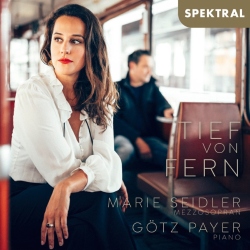
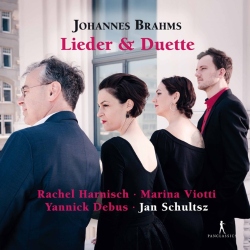
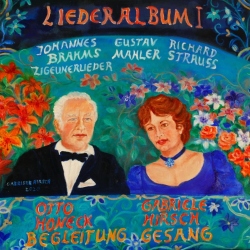
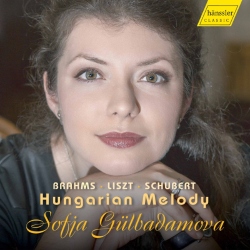
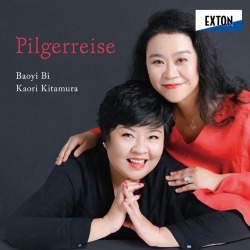
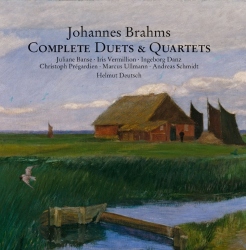
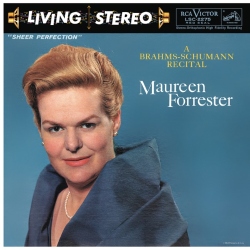

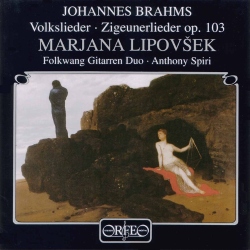
Featured Music
Main Perform Artists
Guitar
Choir/Chorus
Piano
Piano
Baritone (Vocal)
Mezzo-Soprano (Vocal)
Soprano Vocal
Soprano (Vocal)
Piano
Mezzo-Soprano Vocal
Fortepiano
Piano
Piano