


Lorna Cooke de Varon
Released Album
Choral
-
 May 13, 2016
 -
 April 16, 2004
 -
Orchestral
-
 March 19, 2024
 -
 July 14, 2023
 -
-
 January 1, 2000
Symphony
Artist Info
Role:Conductor PerformerPeriod:ClassicalRomanticModernGenre:BalletChoralSymphonyLorna Cooke de Varon was a renowned classical music artist who made significant contributions to the world of music. Born on August 7, 1910, in Boston, Massachusetts, Lorna was the daughter of a prominent physician, Dr. William Cooke, and his wife, Edith. Her father was a music lover and encouraged Lorna to pursue her passion for music from a young age. Lorna began her musical training at the age of five, studying piano with her mother. She showed exceptional talent and was soon enrolled in the New England Conservatory of Music, where she studied under the tutelage of renowned pianist and composer, George Whitefield Chadwick. Lorna's talent was evident from the start, and she quickly became one of Chadwick's star pupils. In 1926, Lorna made her debut as a soloist with the Boston Symphony Orchestra, performing Mozart's Piano Concerto No. 23 in A major. The performance was a resounding success, and Lorna was hailed as a prodigy. She continued to perform with the Boston Symphony Orchestra throughout her career, becoming one of their most beloved soloists. In 1930, Lorna graduated from the New England Conservatory of Music with a degree in piano performance. She then traveled to Europe to study with some of the most renowned pianists of the time, including Artur Schnabel and Alfred Cortot. Lorna's time in Europe was transformative, and she returned to the United States with a new perspective on music. In 1933, Lorna married the composer and conductor, Bernard de Varon. The couple had two children, a son named William and a daughter named Edith. Lorna continued to perform and record throughout her marriage, and her career flourished. One of Lorna's most significant achievements was her performance of Beethoven's Piano Concerto No. 4 in G major with the Boston Symphony Orchestra in 1949. The performance was hailed as a masterpiece, and Lorna was praised for her interpretation of the piece. She continued to perform the concerto throughout her career, becoming one of its most celebrated interpreters. In addition to her work as a soloist, Lorna was also a respected chamber musician. She performed with some of the most renowned chamber ensembles of the time, including the Budapest Quartet and the Juilliard String Quartet. Her collaborations with these ensembles were highly acclaimed, and she was praised for her ability to blend seamlessly with the other musicians. Lorna was also a dedicated teacher, and she taught at the New England Conservatory of Music for over 30 years. Her students included some of the most talented pianists of the time, including Russell Sherman and Wha Kyung Byun. Lorna was known for her rigorous teaching style and her ability to bring out the best in her students. Throughout her career, Lorna received numerous awards and honors for her contributions to the world of music. In 1956, she was awarded the Boston Symphony Orchestra's Medal for Distinguished Service to Music. In 1960, she was awarded an honorary Doctor of Music degree from the New England Conservatory of Music. In 1970, she was awarded the Harvard Musical Association's Arthur W. Foote Award for her contributions to the musical life of Boston. Lorna continued to perform and record well into her 80s, and she remained an active member of the musical community until her death in 1999. Her legacy as a performer, teacher, and champion of classical music lives on, and she is remembered as one of the most talented and influential musicians of her time.More....
Recent Artist Music
4
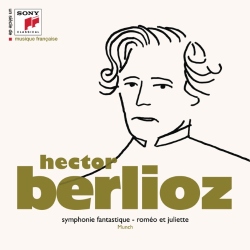
Romeo and Juliet, H.79, Op. 17
Première partie - Introduction: Combats - Tumulte - Intervention du Prince. Prologue
4:55
5
3:32


Copyright Ⓒ 2013 Davinci Finger. All rights reseved
Service Terms & Policy