


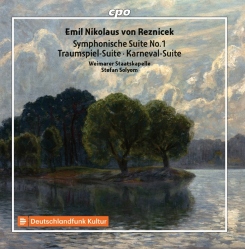
Weimar Staatskapelle
Released Album
Symphony
-
 March 26, 2012
 -
 April 27, 2010
 -
 September 28, 2009
 -
 November 8, 2005
Orchestral
-
 February 14, 2020
 -
-

-
-
 October 30, 2007
Concerto
-
 June 16, 2017
 -
-
 1960
1960
Choral
-
 January 5, 2018
 -
 October 14, 2016
 -
 November 20, 2007
 -
 July 19, 2005
Artist Info
Role:EnsembleGenre:ChoralConcertoSymphonyVocalThe Weimar Staatskapelle is a renowned classical music orchestra based in Weimar, Germany. The orchestra has a rich history dating back to the 16th century, making it one of the oldest orchestras in the world. The Weimar Staatskapelle has been a significant contributor to the classical music scene in Germany and has performed in some of the most prestigious venues around the world. The Weimar Staatskapelle was founded in 1491 by the Elector of Saxony, Friedrich III. The orchestra was initially known as the Hofkapelle, and its primary function was to provide music for the court. The orchestra was made up of a small group of musicians who played a variety of instruments, including strings, woodwinds, and brass. Over the years, the orchestra grew in size and reputation. In the 18th century, the Weimar Staatskapelle became the official orchestra of the Weimar court, and its members were among the most respected musicians in Germany. The orchestra continued to perform for the court until the early 20th century when it became a public orchestra. Throughout its history, the Weimar Staatskapelle has been led by some of the most prominent conductors in the world. In the 19th century, the orchestra was led by Franz Liszt, who was also the court pianist. Liszt was known for his innovative approach to conducting and his ability to bring out the best in his musicians. Under his leadership, the Weimar Staatskapelle became one of the most respected orchestras in Europe. In the 20th century, the Weimar Staatskapelle continued to attract top talent. In the 1920s, the orchestra was led by the conductor Hermann Abendroth, who was known for his passionate and expressive conducting style. Abendroth was a champion of contemporary music and was responsible for premiering many new works by composers such as Arnold Schoenberg and Anton Webern. During World War II, the Weimar Staatskapelle suffered significant losses. Many of its musicians were conscripted into the military, and the orchestra was forced to disband. After the war, the orchestra was reformed, and it quickly regained its reputation as one of the best orchestras in Germany. In the post-war era, the Weimar Staatskapelle was led by the conductor Franz Konwitschny. Konwitschny was known for his meticulous attention to detail and his ability to bring out the nuances in the music. Under his leadership, the orchestra became known for its interpretations of the works of Bach, Beethoven, and Brahms. In the 1970s, the Weimar Staatskapelle was led by the conductor Kurt Masur. Masur was a champion of contemporary music and was responsible for premiering many new works by composers such as Krzysztof Penderecki and Alfred Schnittke. Masur was also known for his commitment to social justice and was a vocal opponent of the East German government. In the 21st century, the Weimar Staatskapelle continues to be one of the most respected orchestras in the world. The orchestra is currently led by the conductor Kirill Karabits, who has been praised for his innovative programming and his ability to bring out the best in his musicians. The Weimar Staatskapelle has performed in some of the most prestigious venues around the world, including the Royal Albert Hall in London, the Musikverein in Vienna, and the Carnegie Hall in New York. The orchestra has also collaborated with some of the most prominent soloists in the world, including Martha Argerich, Yo-Yo Ma, and Anne-Sophie Mutter.More....
Recent Artist Music
4
3:5
5
20:7


14
Cantata for the 20th Anniversary of the October Revolution, Op. 74
II. The Philosophers. Andante assai
2:18
Copyright Ⓒ 2013 Davinci Finger. All rights reseved
Service Terms & Policy