


Arrigo Boito
Released Album
Opera
-
 March 3, 2024
 -
 January 12, 2024
 -
 November 24, 2023
 -
 November 3, 2023
 -
 March 24, 2023
 -
 September 1, 2022
Artist Info
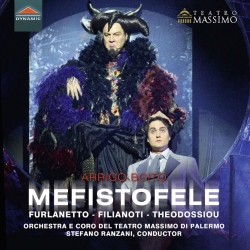
Role:ComposerCountry: ItalyBirth:February 24, 1842 in Padua, ItalyDeath:June 10, 1918 in Milan, ItalyPeriod:RomanticGenre:OperaArrigo Boito was an Italian composer, librettist, and poet who was born on February 24, 1842, in Padua, Italy. He was the son of a painter and a Polish countess, and his family was well-connected in the artistic and intellectual circles of Italy. Boito showed an early interest in music and literature, and he began composing and writing poetry at a young age. Boito's musical education began at the Milan Conservatory, where he studied under Amilcare Ponchielli and Alberto Mazzucato. He was a talented student and won several awards for his compositions, including a prize for his opera Mefistofele, which he wrote while still a student. Mefistofele would go on to become Boito's most famous work and one of the most important operas of the 19th century. After completing his studies, Boito moved to Rome, where he became involved in the literary and artistic circles of the city. He wrote poetry and essays, and he became friends with many of the leading writers and artists of the time, including Gabriele D'Annunzio and Giovanni Pascoli. Boito also began working as a librettist, writing the libretti for several operas, including Verdi's Otello and Falstaff. Boito's own compositions were heavily influenced by the works of Richard Wagner, and he was one of the leading proponents of the Wagnerian style in Italy. His music was characterized by its lush harmonies, complex orchestration, and dramatic intensity. In addition to Mefistofele, Boito wrote several other operas, including Nerone, which was never completed, and Ero e Leandro, which was completed but never performed. Boito's career as a composer was interrupted by his involvement in politics. He was a fervent nationalist and was involved in the Italian unification movement, which sought to unify Italy under a single government. Boito was a member of the Italian parliament and was involved in several political campaigns, including the campaign to free Rome from papal rule. Despite his political activities, Boito continued to compose and write. He wrote several plays and essays, and he continued to work as a librettist, writing the libretti for several operas, including Ponchielli's La Gioconda and Franco Faccio's Amleto. Boito's later years were marked by illness and financial difficulties. He suffered from a heart condition and was forced to curtail his activities. He died on June 10, 1918, in Milan, Italy. Boito's legacy as a composer and writer is significant. His opera Mefistofele is still performed today and is considered one of the most important operas of the 19th century. His influence on Italian music and literature was profound, and his work helped to shape the cultural landscape of Italy in the late 19th and early 20th centuries.More....
Recent Artist Music


Related Artists
Copyright Ⓒ 2013 Davinci Finger. All rights reseved
Service Terms & Policy