


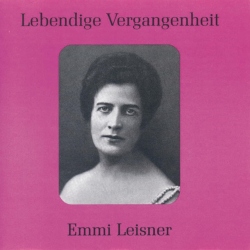
Emmi Leisner
Released Album
Opera
-
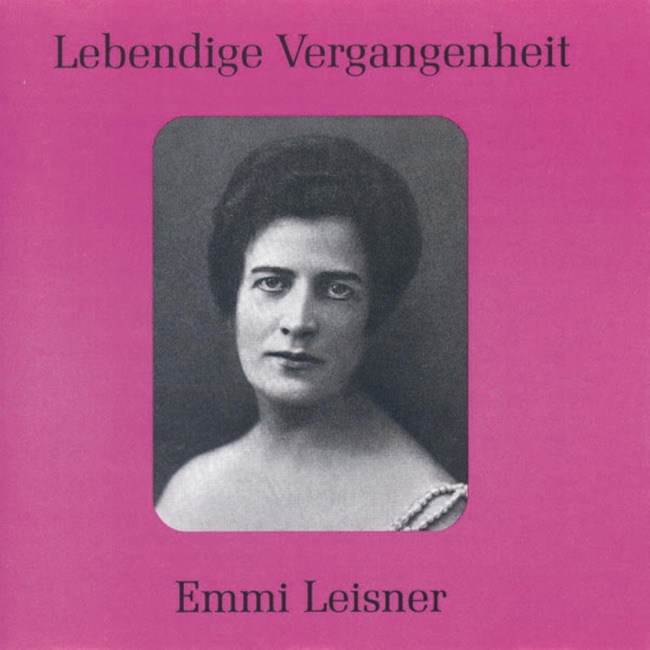 October 30, 2001
 -
-
 January, 1998
 -
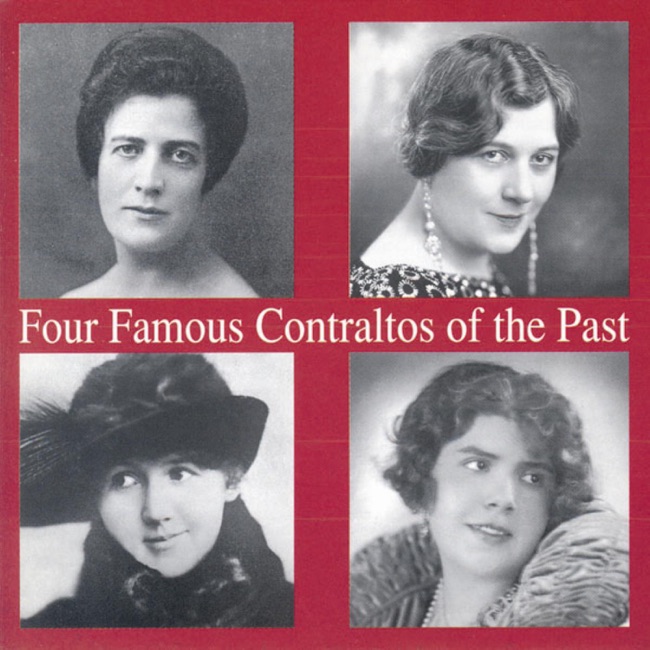 July 15, 1997
 -
 February 7, 1995
Artist Info
Period:BaroqueClassicalRomanticGenre:OperaVocalEmmi Leisner was a German contralto singer who was born on February 23, 1885, in Königsberg, East Prussia (now Kaliningrad, Russia). She was the daughter of a music teacher and grew up in a musical family. Her father recognized her talent for singing at an early age and began to train her voice. She made her debut at the age of 16 in a performance of Bach's St. Matthew Passion. Leisner continued her studies at the Berlin Hochschule für Musik, where she was a pupil of Lilli Lehmann. She made her professional debut in 1907 at the Stadttheater in Breslau (now Wrocław, Poland), where she sang the role of Azucena in Verdi's Il trovatore. She quickly established herself as one of the leading contraltos of her time, and her career took her to many of the major opera houses and concert halls of Europe. One of the highlights of Leisner's career was her performance in the premiere of Arnold Schoenberg's Gurre-Lieder in 1913. She sang the role of the Wood Dove, and her performance was widely praised. She also sang in the premiere of Schoenberg's Pierrot Lunaire in 1912. Leisner was known for her powerful and expressive voice, as well as her ability to convey emotion through her singing. She was particularly renowned for her interpretations of the works of Bach, Handel, and Brahms. She was also a champion of contemporary music, and she premiered works by many of the leading composers of her time. During World War I, Leisner performed for German troops on the front lines. She also gave benefit concerts to raise money for war relief efforts. After the war, she continued to perform extensively throughout Europe, and she made several tours of the United States. In 1927, Leisner was appointed a professor at the Berlin Hochschule für Musik, where she taught until 1945. Many of her students went on to have successful careers as singers, including the soprano Elisabeth Schwarzkopf. Leisner's career was cut short by the rise of the Nazi regime in Germany. She was forced to retire from the stage in 1937 because of her Jewish ancestry. She continued to teach at the Hochschule until 1945, when the school was closed by the Allied forces. After the war, Leisner moved to Switzerland, where she lived until her death in 1950. She continued to teach and give masterclasses, and she remained an influential figure in the world of classical music. Leisner received many honors and awards during her career. She was awarded the title of Kammersängerin by the Prussian government in 1919, and she was made a professor at the Berlin Hochschule für Musik in 1927. She was also awarded the Goethe Medal in 1949 for her contributions to German culture. Emmi Leisner was a pioneering figure in the world of classical music. Her powerful voice and expressive interpretations of the works of Bach, Handel, and Brahms made her one of the leading contraltos of her time. Her commitment to contemporary music and her advocacy for new works helped to shape the course of classical music in the 20th century. Despite the obstacles she faced because of her Jewish ancestry, she remained dedicated to her art and continued to inspire generations of musicians.More....
Recent Artist Music
1
6:17
Copyright Ⓒ 2013 Davinci Finger. All rights reseved
Service Terms & Policy