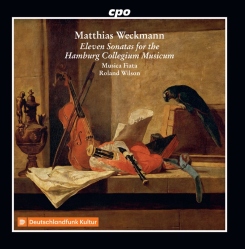
Matthias Weckmann
Sonata à 4, No. 2
Released Album
Recent Album
Works Info
Composer:Matthias WeckmannStyle:SonataAverage_duration:4:53Matthias Weckmann was a German composer and organist of the Baroque era. He was born in Thuringia in 1616 and died in Hamburg in 1674. He was a student of Heinrich Schütz and worked as an organist in Dresden, Nuremberg, and Hamburg. He is known for his vocal and instrumental music, which is characterized by its expressive harmonies and virtuosic keyboard writing. One of Weckmann's most famous works is the Sonata à 4, No. 2. This piece was composed for four instruments, two violins, viola, and basso continuo. It is believed to have been composed in the 1660s, although the exact date is unknown. The piece was likely composed for performance in a church or court setting. The Sonata à 4, No. 2 is divided into four movements. The first movement is a lively and energetic Allegro, characterized by its driving rhythms and virtuosic violin writing. The second movement is a slower Adagio, which features a more lyrical and expressive melody. The third movement is a lively and dance-like Allegro, which features a playful interplay between the violins and viola. The final movement is a fast and energetic Presto, which brings the piece to a thrilling conclusion. The Sonata à 4, No. 2 is a prime example of Weckmann's expressive and virtuosic style. The piece features complex harmonies and intricate counterpoint, which showcase Weckmann's skill as a composer. The violin writing is particularly impressive, with fast runs and virtuosic flourishes that demonstrate Weckmann's understanding of the instrument's capabilities. Overall, the Sonata à 4, No. 2 is a masterpiece of Baroque instrumental music. Its expressive melodies, complex harmonies, and virtuosic writing make it a favorite among performers and audiences alike.More....