


Franz Joseph Haydn
Trio for 2 violins & cello in G major, H. 4/7
Released Album
Recent Album
Works Info
Composer:Franz Joseph HaydnGenre:ChamberStyle:Chamber MusicCompose Date:1784Average_duration:10:38Movement_count:3Movement ....Franz Joseph Haydn's Trio for 2 violins & cello in G major, H. 4/7, also known as the "Gypsy Trio," was composed in the early 1790s. It premiered in Vienna in 1795 and was published in 1797. The trio consists of three movements: 1. Andante 2. Poco adagio, cantabile 3. Rondo all'Ongarese The first movement, Andante, begins with a simple, lyrical melody played by the first violin. The second violin and cello then join in, creating a rich, full sound. The movement is characterized by its use of syncopation and dotted rhythms, which give it a lively, dance-like quality. The second movement, Poco adagio, cantabile, is a slow, expressive piece that showcases the trio's ability to play with great sensitivity and emotion. The first violin takes the lead with a mournful melody, while the second violin and cello provide a gentle accompaniment. The movement is notable for its use of chromaticism, which adds to its melancholic tone. The final movement, Rondo all'Ongarese, is a lively, energetic piece that draws on Hungarian folk music. It features a fast-paced, driving rhythm and a catchy, memorable melody that is passed between the three instruments. The movement is characterized by its use of syncopation, dotted rhythms, and rapid-fire runs, which give it a distinctly Eastern European flavor. Overall, Haydn's Trio for 2 violins & cello in G major is a masterful work that showcases the composer's skill at writing for small ensembles. Its three movements are each distinct in character and style, yet they come together to form a cohesive whole. The trio's use of syncopation, dotted rhythms, and chromaticism give it a unique sound that sets it apart from other works of its time.More....
Works Music
Released Music
1
5:48
2
3:39
3
2:30
4
4:1
6
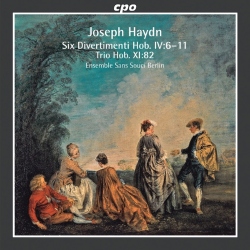
5:9
7
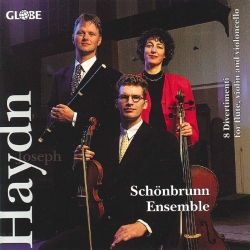
2:33
8
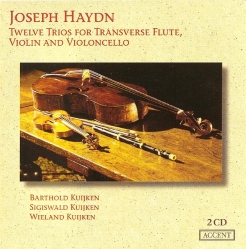
3:31
9
3:42
10
2:45