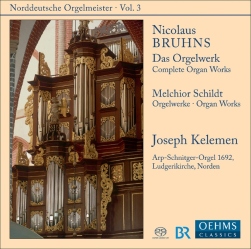
Nicolaus Bruhns
Praeludium in E 'lesser'
Released Album
Recent Album
-
-
-
-
-
-
-
-
-
-
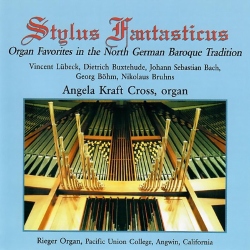
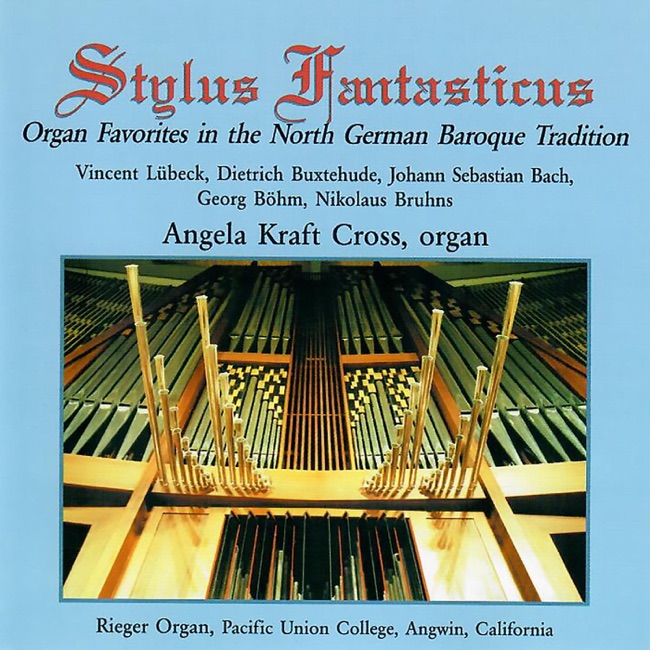 Angela Kraft CrossJanuary 1, 2003
Featured Album
Works Info
Composer:Nicolaus BruhnsGenre:KeyboardStyle:KeyboardAverage_duration:4:43Nicolaus Bruhns was a German Baroque composer and organist who lived from 1665 to 1697. He was born in Schwabstedt, Schleswig-Holstein, and was the son of a Lutheran pastor. Bruhns was a student of the famous Danish-German composer and organist Dieterich Buxtehude, who was also his father-in-law. Bruhns' music is characterized by its virtuosity, expressiveness, and emotional intensity. One of Bruhns' most famous works is his "Praeludium in E 'lesser'," which was composed for the organ. The piece is believed to have been written around 1690, during Bruhns' time as the organist at the St. Mary's Church in Lübeck, Germany. The "Praeludium in E 'lesser'" is a prelude in the key of E minor, and it is divided into three movements. The first movement of the "Praeludium in E 'lesser'" is marked "Praeludium," and it is a lively and virtuosic piece that showcases Bruhns' skill as an organist. The movement begins with a series of fast arpeggios and runs, which are followed by a series of chords and a descending scale. The music then becomes more complex, with a series of rapid-fire passages and intricate counterpoint. The movement ends with a series of chords and a final flourish. The second movement of the "Praeludium in E 'lesser'" is marked "Adagio," and it is a slow and expressive piece that contrasts with the first movement. The movement begins with a simple melody played on the organ's flute stops, which is then joined by a series of chords. The music then becomes more complex, with a series of arpeggios and runs. The movement ends with a series of chords and a final cadence. The third movement of the "Praeludium in E 'lesser'" is marked "Fuga," and it is a fugue that showcases Bruhns' skill as a composer. The movement begins with a simple theme played on the organ's trumpet stops, which is then developed and expanded upon through a series of imitative entries. The music becomes more complex as the fugue progresses, with a series of intricate counterpoint and rapid-fire passages. The movement ends with a series of chords and a final cadence. Overall, the "Praeludium in E 'lesser'" is a virtuosic and expressive piece that showcases Bruhns' skill as both an organist and a composer. The piece is notable for its complex counterpoint, rapid-fire passages, and emotional intensity. It remains a popular piece in the organ repertoire to this day.More....
Works Music
Released Music
1
9:9
9
4:38
10
8:18
Featured Music