Dietrich Buxtehude
O wie selig sind, BuxWV 90
Released Album
Recent Album
Featured Album
Works Info
Composer:Dietrich BuxtehudeGenre:VocalStyle:Vocal MusicAverage_duration:9:27Dietrich Buxtehude's 'O wie selig sind, BuxWV 90' is a sacred vocal work composed for four-part choir and basso continuo. The piece is believed to have been composed in the late 17th century, during Buxtehude's tenure as the organist at the Marienkirche in Lübeck, Germany. The work is structured in three movements, with the first and third movements being in common time and the second movement in triple time. The first movement is a joyful and celebratory chorus, with the choir singing the text "O wie selig sind, die zu Jesu Leibe stehen" (Oh how blessed are those who stand in Jesus' flock). The second movement is a slower and more contemplative aria, with the soloist singing the text "Ich bin eine Blume zu Saron" (I am a flower of Sharon). The final movement returns to the joyful mood of the first movement, with the choir singing the text "Halleluja, Amen" in a lively and energetic manner. The piece is characterized by Buxtehude's use of rich harmonies and expressive melodies, as well as his skillful handling of the basso continuo. The first and third movements feature lively and intricate counterpoint between the choir and basso continuo, while the second movement showcases Buxtehude's ability to create a sense of intimacy and introspection through the use of a solo voice and sparse accompaniment. 'O wie selig sind' is believed to have been premiered during one of Buxtehude's Abendmusiken (evening concerts) at the Marienkirche in Lübeck. These concerts were highly popular and attracted audiences from all over Europe, and Buxtehude was known for his innovative and expressive compositions. 'O wie selig sind' is a prime example of Buxtehude's skill as a composer and his ability to create music that is both technically impressive and emotionally moving.More....
Works Music
Released Music
1
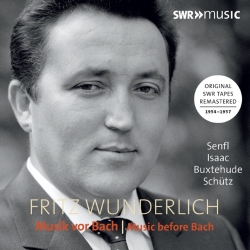
O how blessed are you, BuxWV 90
O wie selig sind, die zu dem Abendmahl des Lammes berufen sind
9:25
Featured Music