Giovanni Paolo Cima
Sonata a tre
Released Album
Recent Album
Featured Album
Works Info
Composer:Giovanni Paolo CimaGenre:ChamberStyle:SonataPublication Date:1610Average_duration:4:59Giovanni Paolo Cima's 'Sonata a tre' is a Baroque instrumental composition that was composed in the early 17th century. The exact date of its composition is unknown, but it is believed to have been written between 1610 and 1620. The piece was first performed in Italy, where Cima was born and spent most of his life. The 'Sonata a tre' is a three-movement work that is scored for two violins and basso continuo. The first movement is marked by a lively tempo and features a series of intricate melodic lines that are passed between the two violins. The second movement is slower and more contemplative, with a more subdued mood and a greater emphasis on harmony. The final movement is a fast and energetic dance, with a lively rhythm and a playful character. One of the most notable characteristics of Cima's 'Sonata a tre' is its use of counterpoint. The piece features a complex interweaving of melodic lines that create a rich and intricate texture. This is particularly evident in the first movement, where the two violins engage in a lively dialogue that showcases Cima's skill as a composer. Another notable feature of the 'Sonata a tre' is its use of ornamentation. Cima employs a variety of trills, turns, and other embellishments throughout the piece, adding a sense of virtuosity and flair to the performance. Overall, Cima's 'Sonata a tre' is a masterful example of Baroque instrumental music. Its intricate counterpoint, lively rhythms, and virtuosic ornamentation make it a challenging and rewarding piece for performers and a delight for audiences.More....
Works Music
Released Music
1
Sonata to be
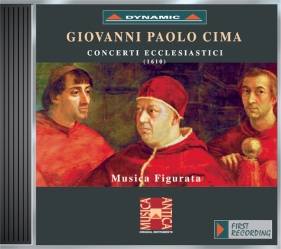
Sonata a Tre (Concerti ecclesiastici... e sei Sonate per Instrumenti a due, tre, e quatro)
3:5

Featured Music