


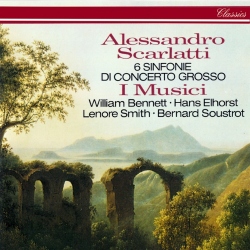
Alessandro Scarlatti
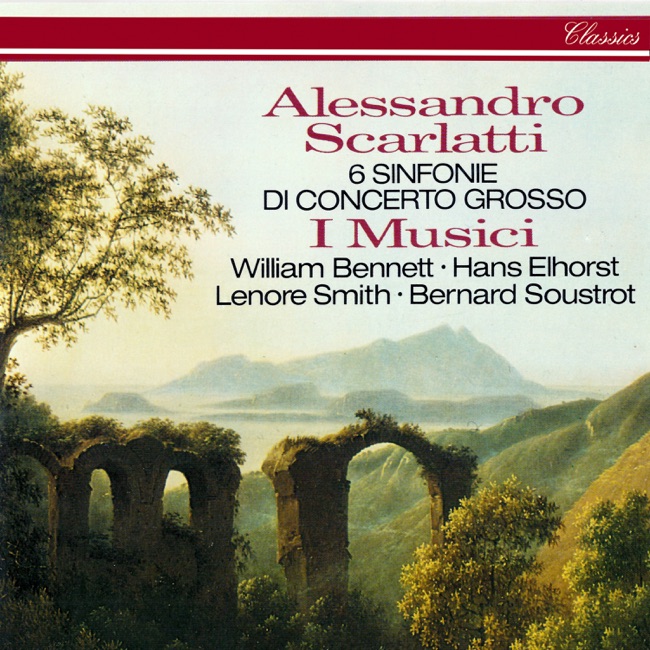
Sinfonie di concerto grosso No. 6 in A minor
Released Album
Recent Album
Works Info
Composer:Alessandro ScarlattiGenre:ConcertoStyle:ConcertoCompose Date:1715Average_duration:7:15Movement_count:5Movement ....Alessandro Scarlatti's 'Sinfonie di concerto grosso No. 6 in A minor' is a Baroque masterpiece that was composed in the early 18th century. The piece was premiered in Rome in 1715 and is considered one of Scarlatti's most significant works. The 'Sinfonie di concerto grosso No. 6 in A minor' is divided into four movements, each with its own unique characteristics. The first movement, marked Allegro, is a lively and energetic piece that features a call-and-response between the soloists and the orchestra. The second movement, marked Adagio, is a slow and melancholic piece that showcases the soloists' ability to play with emotion and sensitivity. The third movement, marked Allegro, is a fast and playful piece that features intricate counterpoint and virtuosic solo passages. The final movement, marked Allegro, is a triumphant and celebratory piece that brings the work to a thrilling conclusion. One of the most notable characteristics of Scarlatti's 'Sinfonie di concerto grosso No. 6 in A minor' is its use of the concerto grosso form. This form features a small group of soloists (the concertino) who play in contrast to the larger orchestra (the ripieno). Scarlatti's use of this form allows for a dynamic interplay between the soloists and the orchestra, creating a rich and complex musical texture. Another characteristic of the piece is its use of Baroque ornamentation. Scarlatti's writing is filled with trills, turns, and other embellishments that add depth and complexity to the music. The soloists are particularly adept at executing these ornaments, adding a level of virtuosity to the performance. Overall, Scarlatti's 'Sinfonie di concerto grosso No. 6 in A minor' is a masterful work that showcases the composer's skill in writing for both soloists and orchestra. Its use of the concerto grosso form and Baroque ornamentation make it a quintessential example of Baroque music, and its four movements offer a rich and varied listening experience.More....
Works Music
Released Music
1
38
3
2:5
4
1:8
5
2:17
6
8:17
7
7:14