


Johann Sebastian Bach
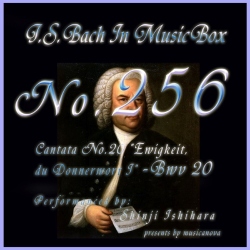
Cantata No. 20, "O Ewigkeit, du Donnerwort", BWV 20
Released Album
Recent Album
Featured Album
Works Info
Composer:Johann Sebastian BachGenre:ChoralStyle:CantataCompose Date:Jun 11, 1724Publication Date:1852First Performance:Jun 11, 1724Average_duration:26:05Movement_count:11Movement ....Johann Sebastian Bach composed Cantata No. 20, O Ewigkeit, du Donnerwort, BWV 20, in 1724 for the 11th Sunday after Trinity. The cantata premiered on August 13, 1724, at the St. Nicholas Church in Leipzig, Germany. The cantata consists of six movements, including an opening chorus, three arias, a recitative, and a closing chorale. The text is based on a hymn by Johann Rist, which reflects on the transience of life and the need for salvation. The opening chorus is a powerful and dramatic piece, featuring a full orchestra and choir. The music is characterized by its use of dissonance and chromaticism, which creates a sense of tension and urgency. The choir sings the hymn text in unison, while the orchestra provides a rich and complex accompaniment. The first aria, sung by the bass soloist, is a contemplative piece that reflects on the fleeting nature of life. The music is slow and mournful, with a simple accompaniment of strings and continuo. The second aria, sung by the alto soloist, is a joyful and uplifting piece that celebrates the promise of eternal life. The music is characterized by its use of dance rhythms and lively melodies, with a playful accompaniment of oboe and continuo. The third aria, sung by the tenor soloist, is a passionate and intense piece that reflects on the fear of judgment and the need for repentance. The music is characterized by its use of chromaticism and dissonance, which creates a sense of unease and tension. The recitative is a brief and solemn piece that reflects on the inevitability of death and the need for salvation. The music is simple and understated, with a sparse accompaniment of continuo. The closing chorale is a simple and straightforward piece that reinforces the themes of the cantata. The choir sings the hymn text in unison, with a simple accompaniment of continuo. Overall, Cantata No. 20 is a powerful and moving work that reflects on the transience of life and the need for salvation. The music is characterized by its use of dissonance, chromaticism, and dance rhythms, which create a sense of tension, urgency, and joy.More....
Works Music
Released Music
1
Cantata no. 20, "O eternity, you word of thunder", BWV 20
Pt. 1: I. Coro. O Ewigkeit, du Donnerwort
4:43
3

4:6
5
Cantata no. 20, "O eternity, you word of thunder", BWV 20
Pt. 2, 11. O Ewigkeit, du Donnerwort
1:4
6
5:17
Featured Music
2
Cantata no. 20, "O eternity, you word of thunder", BWV 20
Recitative: Kein Unglück ist in aller Welt zu finden
54
3
Cantata no. 20, "O eternity, you word of thunder", BWV 20
Aria: Ewigkeit, du machst mir bange
3:41
4
Cantata no. 20, "O eternity, you word of thunder", BWV 20
Recitative: Gesetzt, es daurte der Verdammten Qual
1:23
5
Cantata no. 20, "O eternity, you word of thunder", BWV 20
Aria: Gott ist gerecht in seinen Werken
4:17
6
Cantata no. 20, "O eternity, you word of thunder", BWV 20
Aria: O Mensch, errette deine Seele
2:35
7
Cantata no. 20, "O eternity, you word of thunder", BWV 20
Chorale: Solang ein Gott im Himmel lebt
1:4
8
Cantata no. 20, "O eternity, you word of thunder", BWV 20
Aria: Wacht auf, wacht auf, verloren Schafe
2:35
9
Cantata no. 20, "O eternity, you word of thunder", BWV 20
Recitative: Verlaß, o Mensch! die Wollust dieser Welt
1:7
12
Cantata no. 20, "O eternity, you word of thunder", BWV 20
Sarabande triste. O Mensch, errette deine Seele
2:16