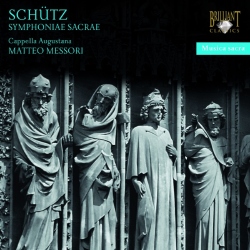
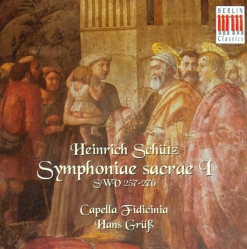
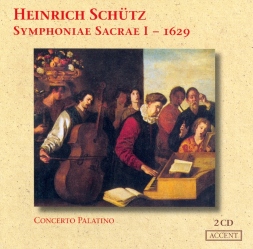
Heinrich Schütz
Symphoniae Sacrae, SWV 257-276 (Op. 6)
Released Album
Recent Album


Works Info
Composer:Heinrich SchützGenre:ChoralStyle:MotetPublication Date:1629Average_duration:96:38Movement_count:20Movement ....Heinrich Schütz's 'Symphoniae Sacrae, SWV 257-276 (Op. 6)' is a collection of sacred concertos for voices and instruments. It was composed in 1629 and premiered in Dresden, Germany. The collection consists of 20 movements, each with its own unique characteristics. The first movement, 'Saul, Saul, was verfolgst du mich?', is a dramatic setting of the conversion of St. Paul. It features a solo tenor voice and a choir, with a lively instrumental accompaniment. The second movement, 'Ich bin eine rufende Stimme', is a solo motet for bass voice and continuo, based on the words of John the Baptist. The third movement, 'Erbarm dich mein, o Herre Gott', is a setting of Psalm 51, a penitential psalm. It features a choir and a rich instrumental accompaniment, with a particularly expressive use of chromaticism. The fourth movement, 'Die mit Tränen säen', is a setting of Psalm 126, a psalm of comfort and hope. It features a solo soprano voice and a choir, with a gentle instrumental accompaniment. The fifth movement, 'Ich danke dem Herrn von ganzem Herzen', is a joyful setting of Psalm 111, a psalm of thanksgiving. It features a choir and a lively instrumental accompaniment, with a particularly virtuosic organ part. The sixth movement, 'Herr, unser Herrscher', is a setting of Psalm 8, a psalm of praise. It features a choir and a majestic instrumental accompaniment, with a particularly prominent role for the brass instruments. The seventh movement, 'Meine Seele erhebt den Herren', is a setting of the Magnificat, the song of Mary from the Gospel of Luke. It features a solo soprano voice and a choir, with a rich instrumental accompaniment that includes a prominent role for the violins. The eighth movement, 'Also hat Gott die Welt geliebt', is a setting of John 3:16, a well-known verse about God's love for the world. It features a choir and a gentle instrumental accompaniment, with a particularly expressive use of dissonance. The ninth movement, 'Selig sind die Toten', is a setting of Revelation 14:13, a text about the blessedness of the dead who die in the Lord. It features a solo bass voice and a choir, with a gentle instrumental accompaniment that includes a prominent role for the viola da gamba. The tenth movement, 'O süßer, o freundlicher', is a setting of a German hymn text that celebrates the sweetness and kindness of Jesus. It features a solo soprano voice and a choir, with a gentle instrumental accompaniment that includes a prominent role for the lute. The eleventh movement, 'Wohl dem, der den Herren fürchtet', is a setting of Psalm 128, a psalm of wisdom. It features a choir and a lively instrumental accompaniment, with a particularly virtuosic organ part. The twelfth movement, 'Verleih uns Frieden gnädiglich', is a setting of a German hymn text that asks for peace. It features a choir and a gentle instrumental accompaniment, with a particularly expressive use of dissonance. The thirteenth movement, 'Herr, nun lässest du deinen Diener in Frieden fahren', is a setting of the Nunc dimittis, the song of Simeon from the Gospel of Luke. It features a solo bass voice and a choir, with a gentle instrumental accompaniment that includes a prominent role for the violins.More....
Works Music
Released Music