


François Couperin
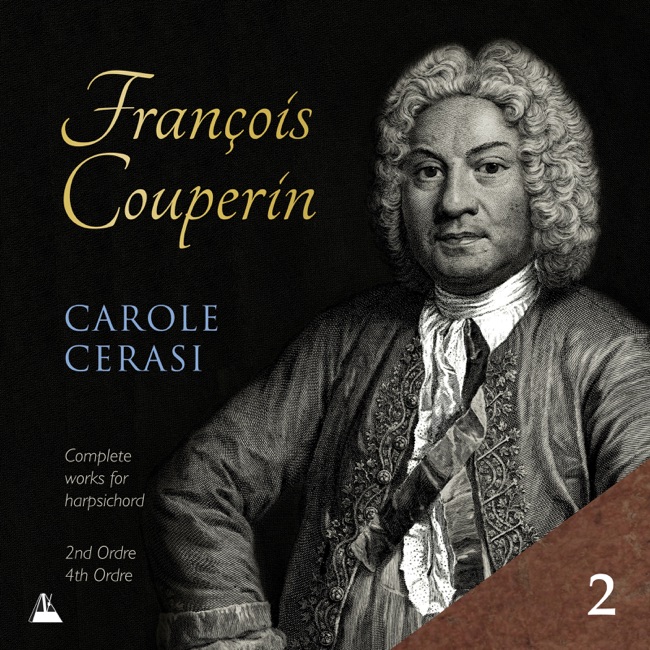
2e ordre for harpsichord (Pièces de clavecin, I)
Released Album
Recent Album
-

-
-
-
-
-
-
-
-
-
 Various ArtistsSeptember 28, 2017
 -
-
Featured Album
Works Info
Composer:François CouperinGenre:KeyboardStyle:KeyboardCompose Date:1713Average_duration:53:29Movement_count:23Movement ....François Couperin's '2e ordre for harpsichord' is a collection of pieces for solo harpsichord, published in 1713 as part of his larger work 'Pièces de clavecin'. The '2e ordre' consists of eight movements, each with its own unique character and technical demands. The '2e ordre' was composed during the Baroque period, a time when the harpsichord was a popular instrument for both solo and ensemble music. Couperin was one of the most prominent French composers of the time, and his music is known for its elegance, refinement, and expressive qualities. The '2e ordre' begins with a prelude, a free-form piece that sets the mood for the rest of the collection. This prelude is characterized by its flowing arpeggios and ornamentation, which create a sense of improvisation and spontaneity. The second movement is a lively and playful allemande, a dance in quadruple meter that was popular in the Baroque era. This movement features intricate ornamentation and a lively, syncopated rhythm. The third movement is a courante, another popular dance form of the time. This courante is characterized by its flowing, graceful melody and its use of hemiola, a rhythmic device that creates a sense of tension and release. The fourth movement is a sarabande, a slow and stately dance that was often used as a contrast to the faster, more lively dances of the time. This sarabande is characterized by its expressive melody and its use of suspensions, which create a sense of tension and release. The fifth movement is a gavotte, a dance in duple meter that was popular in both France and England. This gavotte is characterized by its lively, syncopated rhythm and its use of ornamentation. The sixth movement is a minuet, a dance in triple meter that was often used as a courtly dance. This minuet is characterized by its elegant melody and its use of counterpoint, a technique in which two or more melodies are played simultaneously. The seventh movement is a bourrée, a dance in duple meter that was popular in both France and England. This bourrée is characterized by its lively, syncopated rhythm and its use of ornamentation. The final movement is a chaconne, a form of variation in which a repeating harmonic progression is used as a basis for improvisation. This chaconne is characterized by its virtuosic demands and its use of chromaticism, a technique in which notes outside of the key signature are used to create tension and interest. Overall, the '2e ordre for harpsichord' is a masterful collection of pieces that showcases Couperin's skill as a composer and his understanding of the harpsichord as an expressive and versatile instrument. Its elegant melodies, intricate ornamentation, and technical demands make it a favorite among harpsichordists and Baroque music enthusiasts alike.More....
Works Music
Released Music
5
2:6

8
1:6
10
4:5
Featured Music
2
57
3
1:4
4
1:19
7
3:50
8
1:52