


Louis Spohr
Released Album
Chamber
-
-
-
-
 August 2, 2023
 -
 July 15, 2022
 -
Concerto
-
 June 14, 2019
 -
 March 8, 2019
 -
 October 5, 2018
 -
 December 2, 2014
 -
 December 2, 2013
 -
 September 30, 2013
Vocal
-
 September 8, 2023
 -
 September 28, 2022
 -
 October 16, 2020
 -
 April 3, 2020
 -
 November 1, 2019
 -
 April 26, 2019
Symphony
-
 December 2, 2016
 -
-
 October 14, 2016
 -
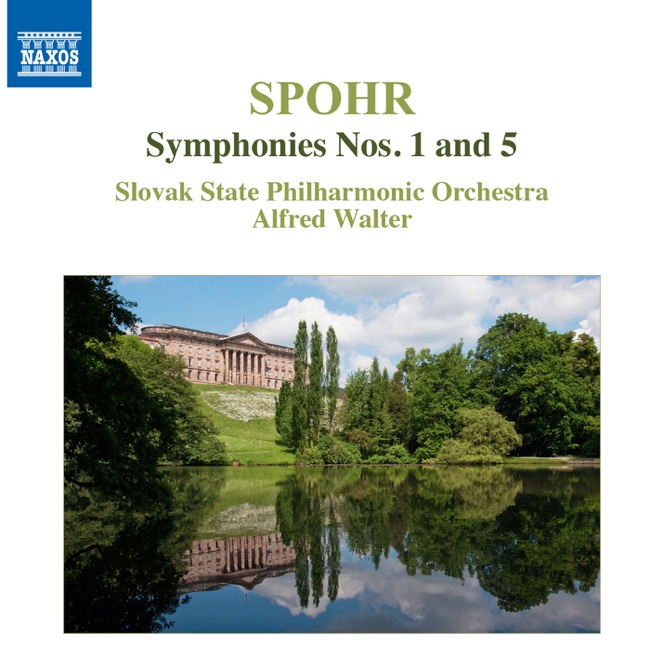 June 10, 2016
 -
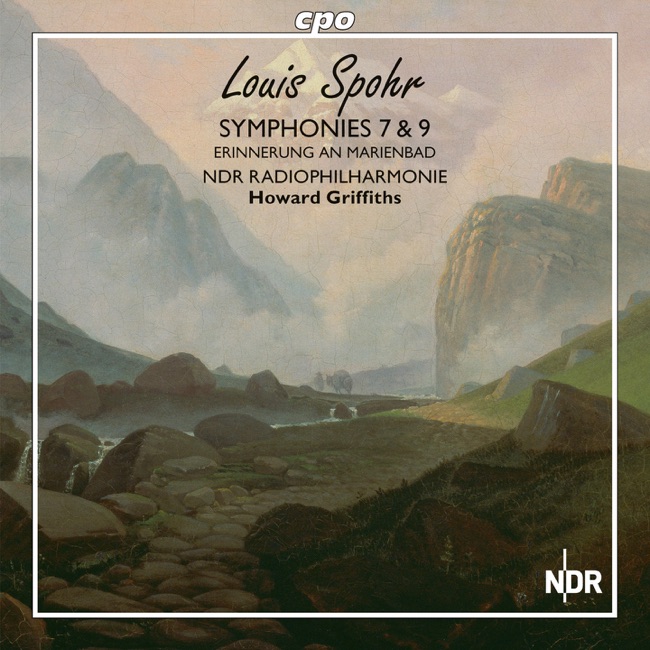 April 14, 2015
 -
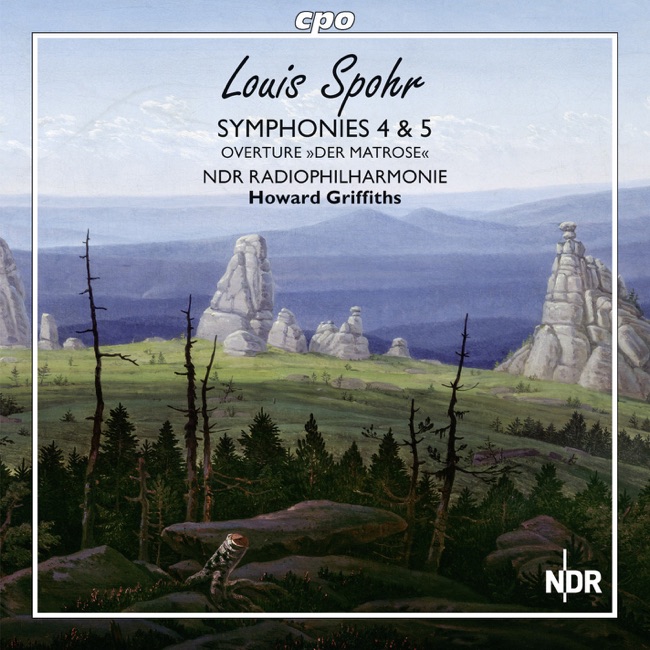 September 24, 2013
Artist Info
Role:ComposerCountry: GermanyBirth:April 5, 1784 in Braunschweig, GermanyDeath:October 22, 1859 in Kassel, GermanyPeriod:ClassicalGenre:ChamberConcertoVocalLouis Spohr was a German composer, violinist, and conductor who lived from 1784 to 1859. He was born in Braunschweig, Germany, on April 5, 1784, to a family of musicians. His father, Karl Heinrich Spohr, was a flautist and his mother, Juliane Benda, was a singer. Spohr showed an early interest in music and began playing the violin at the age of six. Spohr's musical education began with his father, who taught him the basics of music theory and violin technique. He also received lessons from the local organist, Johann Nikolaus Kalischer. At the age of nine, Spohr was sent to study with Franz Eck, a violinist in the Brunswick court orchestra. Eck was a strict teacher who demanded perfection from his students, and Spohr later credited him with instilling in him a strong work ethic and attention to detail. In 1799, Spohr left Brunswick to study with Franz Anton Eck, the concertmaster of the Vienna Court Orchestra. Eck was a renowned violinist and composer, and Spohr learned a great deal from him. He also had the opportunity to attend concerts and operas in Vienna, which exposed him to a wide range of musical styles and genres. After two years in Vienna, Spohr returned to Brunswick and began his career as a professional musician. He played in the court orchestra and also gave private lessons. In 1802, he married Dorette Scheidler, a singer who would later become his muse and collaborator. Spohr's early compositions were influenced by the classical style of Haydn and Mozart, but he soon began to develop his own voice. His first major work was a violin concerto, which he composed in 1804. The concerto was well-received and helped establish Spohr's reputation as a composer. In 1805, Spohr was appointed concertmaster of the court orchestra in Gotha, Germany. This was a prestigious position that gave him the opportunity to conduct and compose for the orchestra. He remained in Gotha for 12 years, during which time he composed some of his most important works. One of Spohr's most famous works is his Violin Concerto No. 8, also known as the "Gesangsszene" or "Song Scene." This concerto is unique in that it includes a vocal soloist, who sings a poem written by Spohr himself. The concerto was composed in 1816 and was dedicated to Spohr's wife, Dorette. It is considered one of the most innovative and original works of the Romantic era. Another important work from Spohr's Gotha period is his oratorio "Die letzten Dinge" (The Last Judgment), which was composed in 1826. The oratorio is a large-scale work for chorus, soloists, and orchestra, and it deals with themes of death, judgment, and redemption. It was a great success when it was first performed and remains one of Spohr's most popular works. In 1817, Spohr was appointed Kapellmeister (music director) of the court orchestra in Kassel, Germany. This was a significant promotion that gave him greater artistic control and a larger platform for his compositions. Spohr remained in Kassel for the rest of his life, and he continued to compose and conduct there until his death in 1859. During his time in Kassel, Spohr composed a number of important works, including his Symphony No. 4, which is known as the "Die Weihe der Töne" (The Consecration of Sound). This symphony is a programmatic work that tells the story of the creation of music, from the chaos of the beginning to the triumph of harmony and melody.More....
Recent Artist Music
3
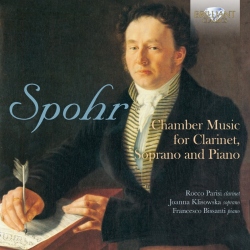
Andante with Variations, for clarinet & string quintet, Op. 34
Andante mit Variationen Op. 34
8:58
5
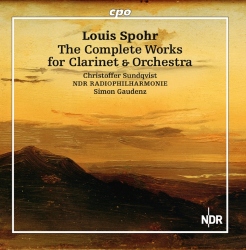
Fantasia and Variations on a theme by Danzi in B flat major, Op. 81
Fantasie und Variationen über ein Thema von Danzi für Klarinette und Streichquartett Op. 81
7:39
6
4:48
7
Symphony No. 6 in G major "Historical", Op. 116
IV. Allerneueste Periode (The Very Latest Period) (1840): Allegro vivace [excerpt]
37
8
Sonata for violin & harp or piano in D major/E flat major, Op. 114
2. Satz. Zauberflötenvariationen
11:41
9
8:23
13
7:36
Works Highlight










Copyright Ⓒ 2013 Davinci Finger. All rights reseved
Service Terms & Policy