


Stanislaw Moniuszko
Released Album
Opera
-
 October 10, 2024
 -
 September 20, 2024
 -
 December 22, 2023
 -
 December 10, 2021
 -
 November 26, 2021
 -
 October 22, 2021
Vocal
-
 May 27, 2022
 -
 December 10, 2012
 -
 May 25, 2010
 -
 May 5, 2007
 -
 June 1, 1995
Chamber
-
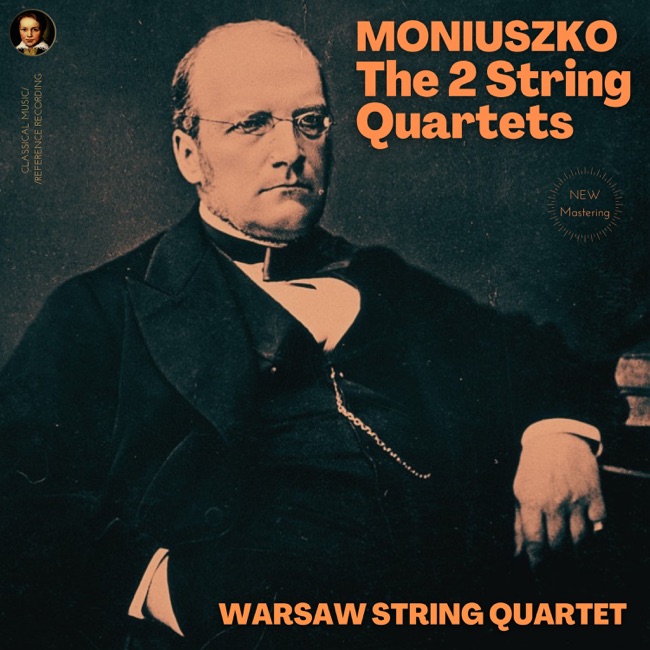 July 20, 2022
 -
 March 6, 2020
 -
 January 27, 2020
 -
 September 6, 2019
 -
Choral
-
 May 18, 2018
 -
 January 1, 2010
 -
 April 28, 2009
 -
 September 5, 2006
Artist Info
Role:ComposerCountry: PolandBirth:May 5, 1819 in UbielDeath:June 4, 1872 in Warsaw, PolandPeriod:RomanticGenre:OperaVocalStanislaw Moniuszko was a prominent Polish composer of the 19th century, known for his contributions to the development of Polish national opera. Born on May 5, 1819, in Ubiel, a small village in present-day Belarus, Moniuszko was the son of a Polish nobleman and a Belarusian mother. His father, Feliks Moniuszko, was a landowner and a musician who played the violin and the piano. Moniuszko grew up in a musical environment and showed an early talent for music. At the age of 12, Moniuszko moved with his family to Vilnius, where he attended a gymnasium and received a solid education in music theory and composition. He also studied the piano and the violin and became proficient in both instruments. In 1837, Moniuszko enrolled at the Warsaw Conservatory, where he studied composition with Józef Elsner, the renowned composer and teacher who had also taught Frédéric Chopin. Moniuszko was a diligent student and quickly gained a reputation as a talented composer. After completing his studies at the conservatory, Moniuszko worked as a music teacher and a conductor in various cities in Poland and Lithuania. In 1848, he settled in Vilnius, where he became the director of the local opera company. It was during this time that Moniuszko began to compose his own operas, which were inspired by Polish folk music and the national struggle for independence. Moniuszko's first opera, "Halka," premiered in 1848 and was an immediate success. The opera tells the story of a young peasant girl who falls in love with a nobleman and is ultimately betrayed by him. The music of "Halka" is characterized by its use of Polish folk melodies and rhythms, which give the opera a distinctly national flavor. The opera was hailed as a masterpiece of Polish national opera and established Moniuszko as one of the leading composers of his time. Over the next two decades, Moniuszko continued to compose operas, many of which were based on Polish folk tales and legends. His most famous works include "The Haunted Manor," "The Countess," and "Paria." These operas are notable for their lyrical melodies, colorful orchestration, and vivid depictions of Polish life and culture. Moniuszko's music was also influenced by the Italian bel canto style, which he had studied during his time in Italy. In addition to his operas, Moniuszko also composed a number of choral works, including cantatas, masses, and hymns. His choral music is characterized by its use of Polish folk melodies and its emphasis on vocal harmony and counterpoint. Moniuszko's most famous choral work is the "Bajka" (Fairy Tale), a setting of a poem by Adam Mickiewicz that tells the story of a young girl who is visited by a fairy. Moniuszko was also a gifted pianist and wrote a number of piano pieces, including mazurkas, polonaises, and waltzes. His piano music is notable for its virtuosic passages and its use of Polish folk rhythms and melodies. Despite his success as a composer, Moniuszko faced many challenges during his lifetime. He struggled with poor health and financial difficulties, and his operas were often censored by the Russian authorities, who controlled Poland at the time. Nevertheless, Moniuszko remained committed to his art and continued to compose until his death in 1872. Today, Moniuszko is regarded as one of the most important composers in Polish music history.More....
Recent Artist Music
7
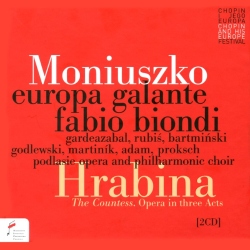
The Countess
Act 1. O mój dziaduniu! W blasku całym (Piosnka Broni) (O granddad! Midst the glamour (Bronia's Song))
5:2

Copyright Ⓒ 2013 Davinci Finger. All rights reseved
Service Terms & Policy