


Alexandre Tansman
Released Album
Chamber
-
 April 7, 2024
 -
 February 16, 2024
 -
 October 14, 2023
 -
 September 1, 2023
 -
 July 21, 2023
 -
 November 11, 2022
Keyboard
-
-
 September 16, 2022
 -
 September 17, 2021
 -
 July 1, 2021
 -
 November 20, 2020
 -

Orchestral
-
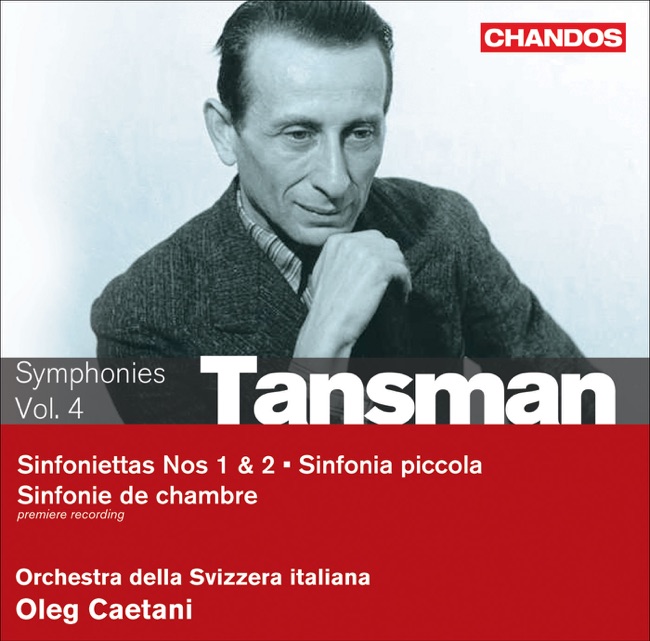 November 17, 2009
 -
 October 10, 2008
 -
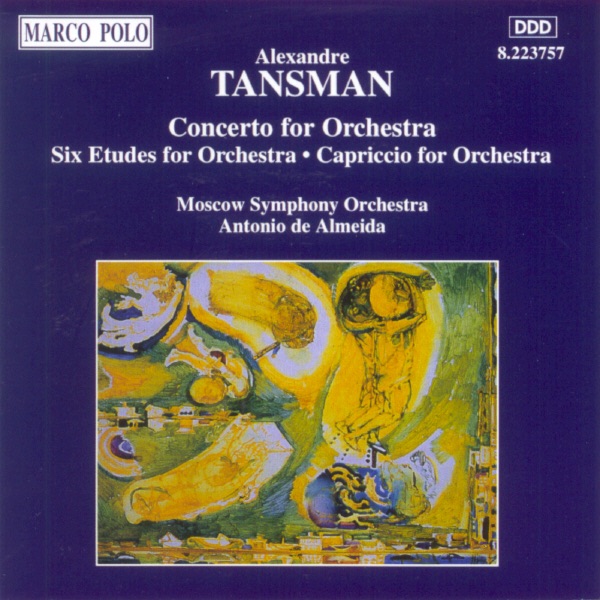 February 21, 1996
Artist Info
Role:ComposerCountry: PolandBirth:June 12, 1897 in Lódz, PolandDeath:November 15, 1986 in Paris, FrancePeriod:ContemporaryModernGenre:ChamberKeyboardAlexandre Tansman was a Polish-born composer who made a significant contribution to the world of classical music during the 20th century. He was born on June 12, 1897, in Łódź, Poland, to a family of Jewish descent. His father was a successful businessman, and his mother was a talented pianist who introduced him to music at an early age. Tansman began his musical education at the age of six, studying piano with his mother. He showed great promise as a musician and was soon enrolled in the Warsaw Conservatory, where he studied composition with Józef Turczyński. He also studied piano with Aleksander Michałowski and theory with Kazimierz Sikorski. In 1919, Tansman moved to Paris to continue his studies at the Conservatoire de Paris. He studied composition with Nadia Boulanger, who was one of the most influential music teachers of the 20th century. He also studied orchestration with Charles Koechlin and piano with Isidor Philipp. During his time in Paris, Tansman became part of a group of composers known as Les Six, which included Darius Milhaud, Francis Poulenc, and Arthur Honegger. The group was known for their rejection of the romanticism of the past and their embrace of new musical styles, such as jazz and neoclassicism. Tansman's early works were heavily influenced by the music of his native Poland, as well as the folk music of other Eastern European countries. He also incorporated elements of jazz and neoclassicism into his compositions, creating a unique and distinctive style. One of Tansman's most significant works from this period is his Piano Sonata No. 2, which was composed in 1921. The sonata is a virtuosic work that showcases Tansman's technical skill as a pianist and his ability to blend different musical styles into a cohesive whole. In the 1930s, Tansman's music became more politically charged, reflecting the turbulent times in which he lived. He was deeply affected by the rise of fascism in Europe and the outbreak of World War II. He composed several works that were explicitly anti-fascist, including his Symphony No. 4, which was composed in 1942. Tansman's Symphony No. 4 is a powerful work that reflects the composer's anger and frustration at the atrocities committed by the Nazis. The symphony is divided into three movements, each of which is marked by a sense of urgency and intensity. The final movement, in particular, is a tour de force that builds to a dramatic climax. After the war, Tansman continued to compose music that reflected his political and social concerns. He was a strong advocate for peace and worked tirelessly to promote cultural exchange between different countries. He composed several works that were inspired by his travels, including his Suite for Two Guitars, which was composed in 1953. Tansman's Suite for Two Guitars is a charming work that showcases the composer's ability to write for unusual instrumental combinations. The suite is made up of five short movements, each of which is based on a different folk melody. The work is notable for its use of unusual guitar techniques, such as harmonics and pizzicato. In addition to his compositions, Tansman was also a respected musicologist and writer. He wrote several books on music, including a biography of Chopin and a study of the music of his native Poland. He was also a prolific writer of articles and essays, many of which were published in leading music journals.More....
Recent Artist Music



6

9:34

9

1:18





Recommend Playlist





Copyright Ⓒ 2013 Davinci Finger. All rights reseved
Service Terms & Policy