


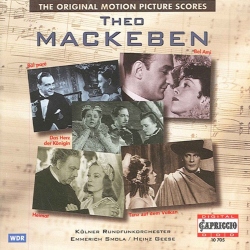
Theo Mackeben
Released Album
Miscellaneous
-
 January 1, 2006
Vocal
-
 August 28, 2001
Opera
-
-
 August 11, 2014
 -
Artist Info
Role:Composer ConductorCountry: GermanyBirth:January 5, 1897 in Stargard, W. PrussiaDeath:January 10, 1953 in Berlin, GermanyGenre:FilmOperaVocalTheo Mackeben was a German composer, pianist, and conductor who was born on January 17, 1897, in Preußisch Oldendorf, Germany. He was the son of a music teacher and grew up in a musical family. Mackeben began playing the piano at a young age and showed great talent. He studied music at the Berlin Conservatory and later at the Hochschule für Musik in Berlin. Mackeben's career as a composer began in the 1920s when he started writing music for films. He quickly became one of the most sought-after composers in the German film industry. His music was known for its catchy melodies and innovative use of jazz and popular music elements. Some of his most famous film scores include "Die Drei von der Tankstelle" (1930), "Der Kongreß tanzt" (1931), and "Ich bei Tag und du bei Nacht" (1932). In addition to his work in film, Mackeben also composed music for the stage. He wrote several operettas, including "Die Frau im Hermelin" (1935) and "Die Nacht der großen Liebe" (1937). His music was also featured in several revues and cabarets, including the famous Berlin cabaret "Die Katakombe." Mackeben's music was popular not only in Germany but also internationally. His song "Bel Ami" became a hit in France, and he was invited to perform at the famous Parisian nightclub "Le Lido." He also toured the United States and performed at the Waldorf Astoria Hotel in New York City. During World War II, Mackeben's career suffered due to his refusal to join the Nazi Party. He was banned from working in the film industry and was forced to go into hiding. After the war, he resumed his career and continued to compose music for films and the stage. He also worked as a conductor and led several orchestras, including the Berlin Radio Symphony Orchestra. Mackeben's music was known for its versatility and ability to blend different styles. He was a master of both classical and popular music and was able to combine the two in a unique and innovative way. His music was also characterized by its emotional depth and ability to capture the mood of a scene. Some of Mackeben's most famous compositions include "Bel Ami," "Ich bei Tag und du bei Nacht," and "Die Drei von der Tankstelle." His music has been featured in numerous films and has become a part of the cultural heritage of Germany. Mackeben died on January 3, 1953, in Berlin, Germany. He left behind a legacy of music that continues to be celebrated and appreciated to this day. His innovative use of jazz and popular music elements in classical compositions has influenced generations of composers and musicians. Mackeben's music remains a testament to his talent and creativity and a reminder of the power of music to transcend boundaries and bring people together.More....
Recent Artist Music


Copyright Ⓒ 2013 Davinci Finger. All rights reseved
Service Terms & Policy