


Erich Ponto
Released Album
Opera
-
 August 11, 2014
 -
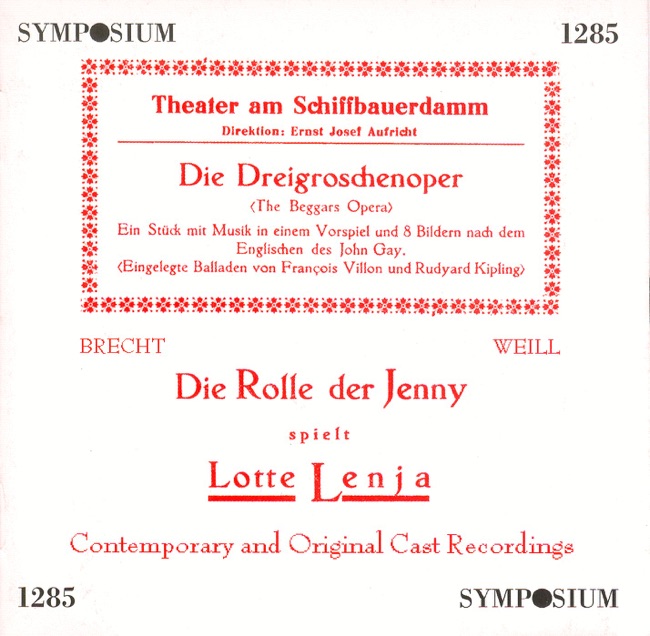
Artist Info
Role:PerformerGenre:OperaErich Ponto was a German classical music artist who was born on December 14, 1884, in Lübeck, Germany. He was the son of a merchant and grew up in a family that was not particularly interested in music. However, Ponto showed an early interest in music and began playing the piano at a young age. Ponto's musical talent was recognized early on, and he was sent to study at the Leipzig Conservatory. There, he studied under some of the most renowned musicians of the time, including Carl Reinecke and Arthur Nikisch. Ponto's talent and hard work paid off, and he graduated with honors in 1906. After completing his studies, Ponto began his career as a concert pianist. He quickly gained a reputation as a talented and versatile musician, and he was soon in demand throughout Germany and Europe. Ponto's performances were praised for their technical brilliance and emotional depth, and he became known for his interpretations of the works of Beethoven, Mozart, and Schumann. One of the highlights of Ponto's early career was his performance of Beethoven's Piano Concerto No. 5 in E-flat major, Op. 73, with the Leipzig Gewandhaus Orchestra in 1910. The performance was a great success, and Ponto was praised for his virtuosity and musicality. He went on to perform the concerto many times throughout his career, and it became one of his signature pieces. In 1914, Ponto was drafted into the German army to serve in World War I. He was wounded in battle and spent several months in a military hospital. After his recovery, he returned to his music career and continued to perform throughout Germany and Europe. In the 1920s and 1930s, Ponto's career continued to flourish. He performed with some of the most prestigious orchestras in Europe, including the Berlin Philharmonic and the Vienna Philharmonic. He also made several recordings, which were highly acclaimed for their technical excellence and musicality. However, Ponto's career was interrupted by the rise of the Nazi party in Germany. As a Jew, Ponto was targeted by the regime, and his performances were banned. He was forced to flee Germany in 1938 and emigrated to Switzerland. In Switzerland, Ponto continued to perform and teach music. He became a professor at the Zurich Conservatory and mentored many young musicians. He also continued to perform throughout Europe, and his concerts were highly praised for their technical brilliance and emotional depth. One of the highlights of Ponto's later career was his performance of Beethoven's Piano Concerto No. 4 in G major, Op. 58, with the Zurich Tonhalle Orchestra in 1952. The performance was a great success, and Ponto was praised for his interpretation of the concerto's lyrical and introspective passages. Ponto's contributions to classical music were recognized with several awards and honors. In 1954, he was awarded the Goethe Medal for his contributions to German culture. He was also awarded the Order of Merit of the Federal Republic of Germany in 1959. Ponto continued to perform and teach music until his death on February 7, 1957, in Zurich, Switzerland. He was remembered as a talented and versatile musician who made significant contributions to the world of classical music. His recordings and performances continue to be admired by music lovers around the world.More....

Copyright Ⓒ 2013 Davinci Finger. All rights reseved
Service Terms & Policy