


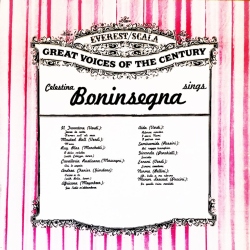
Celestina Boninsegna
Released Album
Opera
-
 March 1, 2011
 -
 October 13, 2009
 -
 December 28, 2004
 -
 March 2, 2004
 -
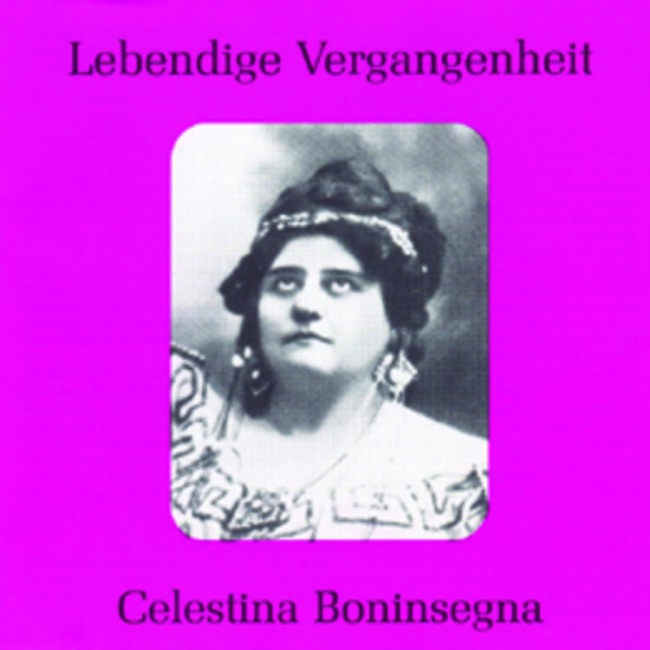 February 24, 2004
 -
 August 6, 2002
Artist Info
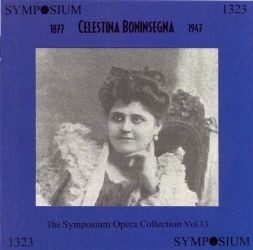
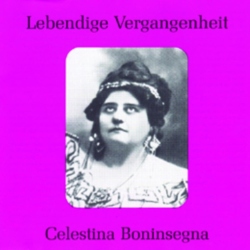
Period:RomanticGenre:OperaCelestina Boninsegna was a renowned Italian soprano who was born on October 5, 1877, in the city of Palermo, Sicily. She was the daughter of a music teacher and grew up in a family that was passionate about music. Her father recognized her talent at an early age and began to train her in singing. She made her debut at the age of 16 in a local production of Verdi's "La Traviata." Boninsegna's talent was soon recognized by the leading opera houses in Italy, and she began to receive invitations to perform in major productions. In 1900, she made her debut at the Teatro alla Scala in Milan, one of the most prestigious opera houses in the world. She performed the role of Leonora in Verdi's "Il Trovatore" and received critical acclaim for her performance. Over the next few years, Boninsegna continued to perform in major productions across Italy, including at the Teatro San Carlo in Naples and the Teatro Regio in Turin. She also began to perform internationally, making her debut at the Royal Opera House in London in 1904. She quickly became a favorite of audiences and critics alike, and her performances were praised for their emotional depth and technical skill. One of Boninsegna's most famous performances was in the title role of Puccini's "Tosca" at the Teatro alla Scala in 1909. Her performance was so powerful that it brought the audience to tears, and she received a standing ovation that lasted for several minutes. The performance cemented her reputation as one of the greatest sopranos of her time. Boninsegna continued to perform throughout the 1910s and 1920s, both in Italy and internationally. She was particularly renowned for her performances in Verdi's operas, including "Aida," "La Forza del Destino," and "Otello." She also performed in several world premieres, including the role of the Queen in Puccini's "Turandot" in 1926. In addition to her performances, Boninsegna was also known for her philanthropy. She was a generous supporter of several charities, including organizations that provided assistance to musicians and their families. She also established a scholarship fund for young singers, which helped to support the next generation of opera stars. Boninsegna received many honors and awards throughout her career. In 1911, she was awarded the title of "Cavaliere" by the Italian government for her contributions to the arts. She was also awarded the title of "Commendatore" in 1926. In 1930, she was awarded the prestigious "Medaglia d'Oro" by the Accademia Nazionale di Santa Cecilia, one of the highest honors that can be bestowed upon a musician in Italy. Boninsegna's career came to an end in the early 1930s, when she began to experience health problems. She retired from the stage in 1932, at the age of 55. She continued to be involved in the music world, however, and served as a mentor to many young singers. Celestina Boninsegna passed away on November 17, 1947, at the age of 70. She left behind a legacy as one of the greatest sopranos of her time, and her performances continue to be celebrated by opera lovers around the world.More....





Copyright Ⓒ 2013 Davinci Finger. All rights reseved
Service Terms & Policy