


Sándor Veress
Released Album
Chamber
-
 July 14, 2023
 -
 June 3, 2022
 -
 January 15, 2021
 -
-

-
 August 23, 2019
Concerto
-
 May 28, 2007
 -
 October, 1998
Orchestral
-
 October 5, 2018
 -
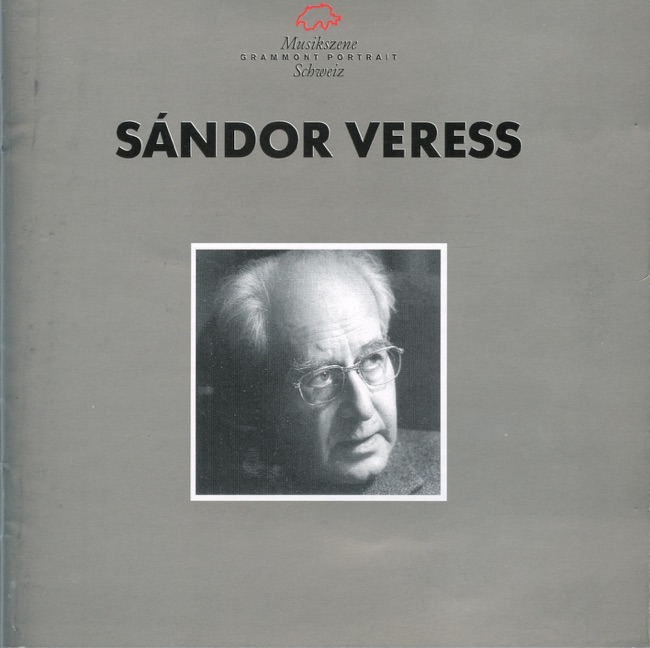 September 9, 2000
 -
 November 3, 1995
Artist Info
Role:Composer PerformerCountry: SwitzerlandBirth:February 1, 1907 in Cluj-Napoca, RomaniaDeath:March 6, 1992 in Berne, SwitzerlandPeriod:ModernGenre:ChamberConcertoOrchestralSándor Veress was a Hungarian-Swiss composer who was born on February 1, 1907, in Kolozsvár, Transylvania, which is now known as Cluj-Napoca, Romania. He was born into a family of musicians, and his father, Lajos Veress, was a composer and music teacher. Sándor Veress began his musical education at a young age, and he studied piano, violin, and composition with his father. In 1924, Veress moved to Budapest to study at the Franz Liszt Academy of Music, where he studied composition with Zoltán Kodály and piano with Béla Bartók. Veress was deeply influenced by Bartók's music, and he became a close friend and collaborator of the composer. Veress also studied with Ernst von Dohnányi and Leo Weiner, and he graduated from the academy in 1929. After graduating, Veress worked as a freelance composer and pianist in Budapest. He also taught at the Franz Liszt Academy of Music and the Budapest Conservatory. In 1933, Veress married the pianist Klára Würtz, and the couple had two children. In 1943, Veress was conscripted into the Hungarian army and was sent to the Eastern Front during World War II. He was captured by the Soviet army in 1944 and spent the rest of the war in a prisoner-of-war camp in Siberia. Veress returned to Hungary in 1946, but he soon left the country due to the political situation. He settled in Switzerland, where he became a citizen in 1952. In Switzerland, Veress continued to compose and teach. He taught at the Basel Conservatory from 1950 to 1972, and he also taught at the Lucerne Festival Academy. Veress was a member of the Swiss Society of Composers, and he was awarded the Swiss Music Prize in 1963. Veress's music is characterized by its use of Hungarian folk music and its incorporation of modernist techniques. His early works, such as his String Quartet No. 1 (1931) and his Sonata for Violin and Piano (1933), show the influence of Bartók and Kodály. Veress's later works, such as his String Trio (1954) and his Sonata for Solo Violin (1962), show the influence of serialism and other modernist techniques. Veress's most famous work is his Four Transylvanian Dances (1931), which are based on folk melodies from Transylvania, the region where Veress was born. The dances are lively and rhythmic, and they showcase Veress's skill at incorporating folk music into his compositions. The Four Transylvanian Dances have been performed and recorded by many orchestras and ensembles around the world. Veress's other notable works include his String Quartet No. 2 (1949), his Concerto for Piano and Orchestra (1951), his Sonata for Viola and Piano (1953), and his Hommage à Paul Klee for Orchestra (1960). Veress's music is known for its emotional depth and its ability to convey a sense of nostalgia and longing. Veress died on March 4, 1992, in Bern, Switzerland. He is remembered as one of the most important Hungarian composers of the 20th century, and his music continues to be performed and recorded by musicians around the world.More....
Recent Artist Music



Copyright Ⓒ 2013 Davinci Finger. All rights reseved
Service Terms & Policy