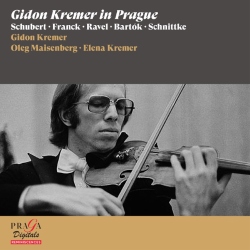
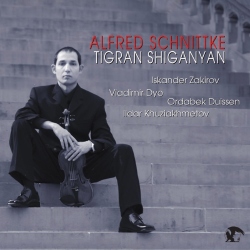
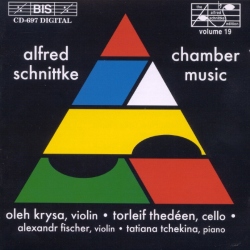
Alfred Schnittke
Moz-Art (after Mozart KV416)
Released Album
Recent Album
-
 Различные ИсполнителиOctober 23, 2019
 -
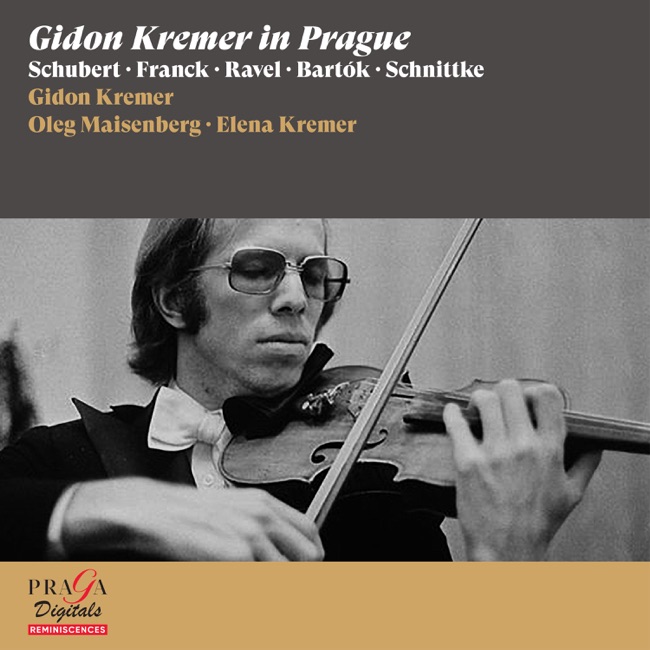
-
-
Works Info
Composer:Alfred SchnittkeGenre:ChamberStyle:Chamber MusicCompose Date:1976Average_duration:5:44Alfred Schnittke's "Moz-Art (after Mozart KV416)" is a composition for two violins and orchestra. It was composed in 1976 and premiered on December 17, 1977, in Moscow, Russia. The piece is divided into three movements, each of which is a reimagining of a different Mozart composition. The first movement is based on Mozart's Sonata for Two Pianos in D major, K. 448. Schnittke takes the opening theme of the sonata and transforms it into a frenzied, dissonant dialogue between the two violins. The orchestra provides a chaotic backdrop, with brass and percussion punctuating the frenetic violin lines. The second movement is based on Mozart's Adagio and Fugue in C minor, K. 546. Schnittke takes the mournful Adagio and expands it into a haunting, atmospheric meditation. The two violins play a mournful duet, with the orchestra providing a sparse, ethereal accompaniment. The third movement is based on Mozart's Symphony No. 41 in C major, K. 551, also known as the "Jupiter" symphony. Schnittke takes the opening theme of the symphony and transforms it into a raucous, cacophonous romp. The two violins engage in a frenzied dialogue, with the orchestra providing a chaotic, almost anarchic accompaniment. Overall, "Moz-Art (after Mozart KV416)" is a bold, experimental work that pushes the boundaries of classical music. Schnittke's use of dissonance, atonality, and unconventional orchestration creates a sense of unease and unpredictability that is both thrilling and unsettling. The piece is a testament to Schnittke's unique vision and his willingness to challenge the conventions of classical music.More....
Works Music
Released Music