


Dietrich Buxtehude
Sonata for 2 violins, viola da gamba & continuo in C major, BuxWV 266
Released Album
Recent Album
Works Info
Composer:Dietrich BuxtehudeGenre:ChamberStyle:SonataAverage_duration:7:49Dietrich Buxtehude's Sonata for 2 violins, viola da gamba & continuo in C major, BuxWV 266, is a Baroque chamber music piece composed in the late 17th century. The exact date of composition is unknown, but it is believed to have been written between 1680 and 1690. The sonata is one of Buxtehude's most famous instrumental works and is often performed by chamber music ensembles today. The sonata consists of four movements: a prelude, allemande, courante, and chaconne. The prelude is a lively and energetic piece that sets the tone for the rest of the sonata. The allemande is a slower, more contemplative movement that features intricate counterpoint between the two violins and the viola da gamba. The courante is a fast and lively dance that showcases the technical abilities of the performers. The chaconne is a set of variations on a repeating bass line, with each variation becoming increasingly complex and virtuosic. One of the most notable characteristics of the sonata is its use of counterpoint. Buxtehude was a master of counterpoint, and the sonata features intricate and complex interweaving melodies between the two violins and the viola da gamba. The sonata also features a strong sense of rhythm and dance, with each movement being based on a different Baroque dance form. The sonata was likely composed for performance in a small chamber or salon setting, rather than in a large concert hall. The use of two violins and a viola da gamba, along with the continuo (which would have been played on a harpsichord or organ), would have been well-suited for intimate performances in a private setting. The sonata was likely premiered in Buxtehude's hometown of Lübeck, where he was the organist at the Marienkirche. Buxtehude was known for his innovative and experimental approach to music, and the Sonata for 2 violins, viola da gamba & continuo in C major, BuxWV 266, is a prime example of his unique style and approach to composition.More....
Works Music
Released Music
1
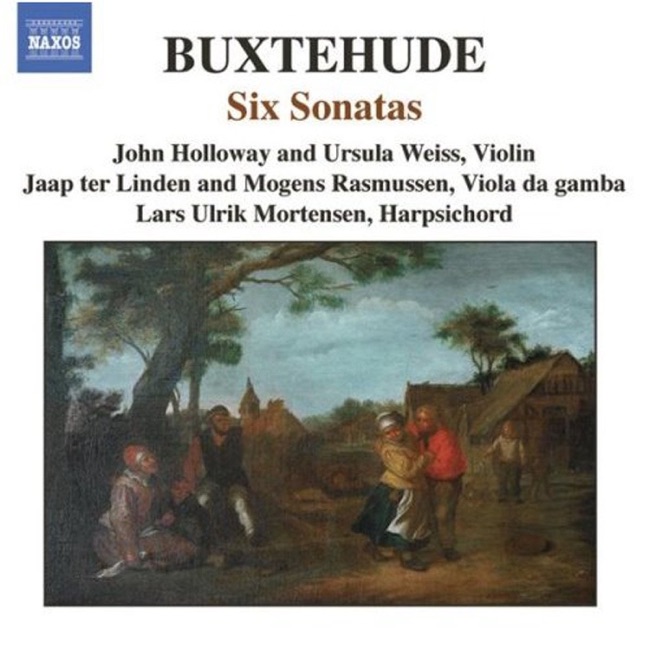
Sonata for 2 violins, viola da gamba & continuo in C major, BuxWV 266
Sonata in C for two violins, viola da gamba and basso continuo BuxWV 266
7:54
2
Sonata for 2 violins, viola da gamba & continuo in C major, BuxWV 266
I. Adagio - Allegro - Adagio
3:6
4
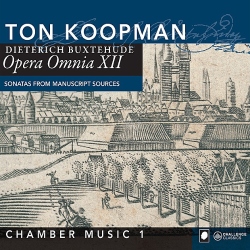
Sonata for 2 violins, viola da gamba & continuo in C major, BuxWV 266
Sonata in C for 2 violiins, viola da gamba & basso continuo, BuxWV 266
7:54
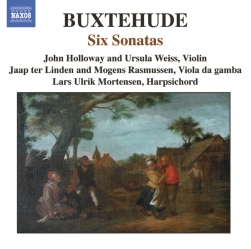
6
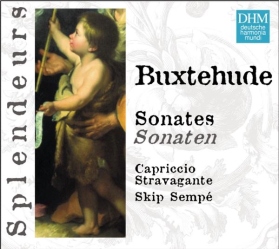
7:25
7
7:55
8
8:3
9
Sonata for 2 violins, viola da gamba & continuo in C major, BuxWV 266
Violino 1 solo: (4/4) - Allegro -
1:31