John Cage
Variations I
Released Album
Recent Album
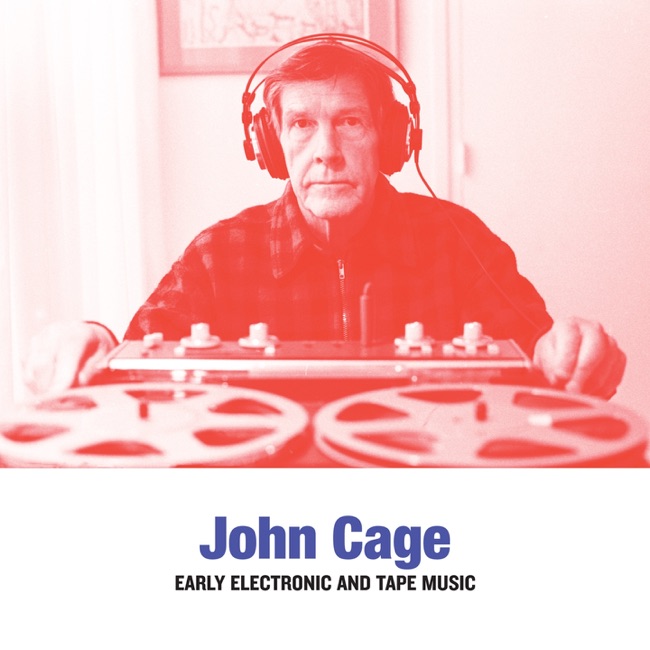
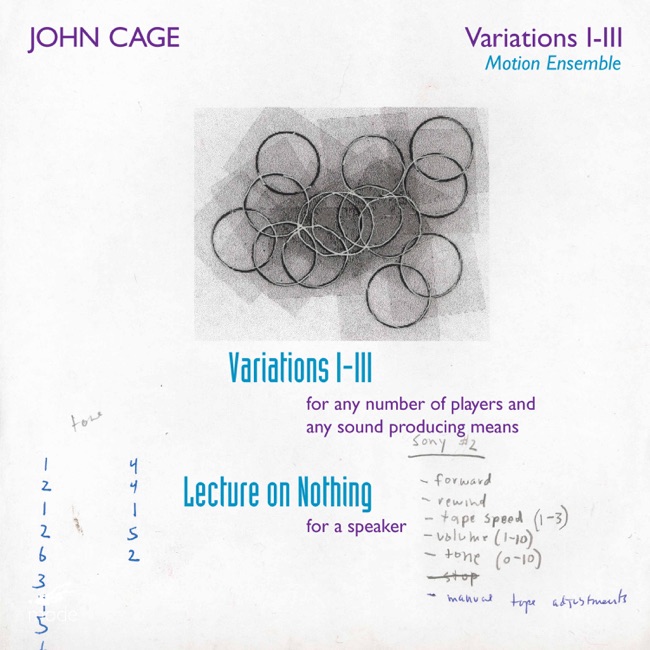

Featured Album
Works Info
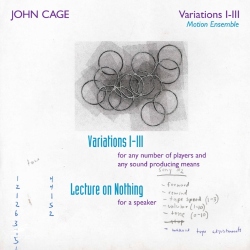
Composer:John CageGenre:MiscellaneousStyle:VariationsCompose Date:1958Average_duration:7:27'Variations I' is a musical composition by John Cage, an American composer, philosopher, and writer. It was composed in 1958 and premiered on May 16, 1958, at the Merce Cunningham Dance Company's studio in New York City. The piece is a part of Cage's larger series of works called 'Variations,' which explores the concept of indeterminacy in music. The composition consists of a set of instructions that the performers follow to create a unique musical performance. The instructions are written on a series of transparent sheets, which are then overlaid on top of each other to create a complex score. The performers are instructed to use a variety of instruments, including radios, contact microphones, and other found objects, to create a soundscape that is constantly evolving and changing. The piece is divided into four movements, each of which explores a different aspect of indeterminacy. The first movement is characterized by the use of chance operations, where the performers randomly select sounds and instruments to create a unique performance. The second movement focuses on the use of silence and the absence of sound, creating a sense of tension and anticipation in the audience. The third movement is characterized by the use of indeterminate notation, where the performers are given a set of instructions but are free to interpret them in their own way. This creates a sense of unpredictability and spontaneity in the performance. The final movement is a return to the use of chance operations, but with a greater emphasis on collaboration and communication between the performers. Overall, 'Variations I' is a groundbreaking work that challenges traditional notions of musical composition and performance. By embracing indeterminacy and chance, Cage creates a musical experience that is constantly evolving and unpredictable, inviting the audience to participate in the creation of the performance.More....