Andrea Antico
Cantai mentre nel core (after Cara)
Released Album
Recent Album
Works Info
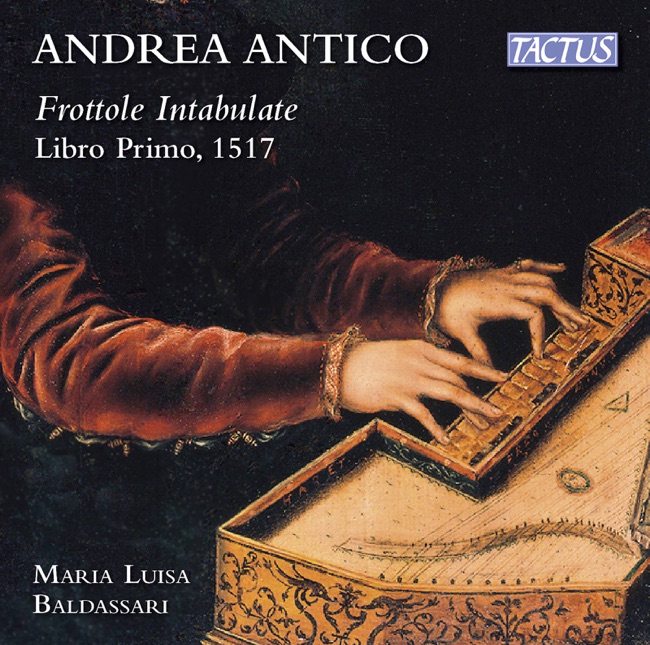
Composer:Andrea AnticoGenre:KeyboardStyle:KeyboardAverage_duration:1:45Andrea Antico was an Italian music printer and composer who lived during the Renaissance period. He was born in Montona, Istria, in 1480 and died in Rome in 1538. Antico was known for his contribution to the development of music printing, and he was the first to use movable type for music printing. He published several collections of music, including the famous "Frottole Intabulate da Sonare" in 1517. One of Antico's compositions is "Cantai mentre nel core (after Cara)," which is a frottola for four voices. The piece is based on a poem by Bernardo Bellincioni, and it was composed in the early 16th century. The premiere of the piece is not known, but it was likely performed in Italy during the Renaissance period. The piece consists of four movements, each with its own distinct characteristics. The first movement is in a homophonic style, with all four voices singing the same melody at the same time. The second movement is in a polyphonic style, with each voice singing a different melody that harmonizes with the others. The third movement is a duet between the alto and tenor voices, with the soprano and bass voices providing a harmonic accompaniment. The final movement is a return to the homophonic style of the first movement, with all four voices singing the same melody. The characteristics of "Cantai mentre nel core (after Cara)" are typical of the frottola genre. The piece is light and playful, with a simple melody and harmonies that are easy to follow. The lyrics are in Italian, and they tell a story of love and longing. The piece is meant to be sung a cappella, without any instrumental accompaniment. In conclusion, "Cantai mentre nel core (after Cara)" is a frottola for four voices composed by Andrea Antico in the early 16th century. The piece consists of four movements, each with its own distinct characteristics, and it is typical of the frottola genre. The piece is light and playful, with a simple melody and harmonies that are easy to follow. The lyrics are in Italian, and they tell a story of love and longing.More....
Works Music
Released Music
1
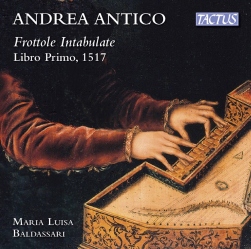
I sang while in the core (after Cara)
Cantai mentre nel core (Frottole Intabulate per sonare organi Libro Primo, Roma 1517)
1:22