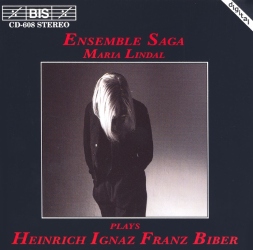
Heinrich Ignaz Franz von Biber
Partia, for 2 violins & continuo No. 5 in G minor, C. 66
Released Album
Recent Album

Works Info
Composer:Heinrich Ignaz Franz von BiberGenre:ChamberStyle:PartitaCompose Date:1696Publication Date:1696Average_duration:10:16Movement_count:5Movement ....Heinrich Ignaz Franz von Biber was a prominent composer and violinist of the Baroque era. He is known for his innovative use of scordatura, a technique that involves tuning the strings of the violin in a non-standard way to produce unique and unusual sounds. One of his most famous works is the Partia No. 5 in G minor, C. 66, which was composed for two violins and continuo. The Partia No. 5 in G minor was composed in the late 17th century, around 1680. It is believed to have been premiered in Salzburg, where Biber was employed as a court musician. The work consists of six movements, each with its own distinct character and style. The first movement, marked "Preludio," is a lively and energetic piece that showcases Biber's virtuosic violin writing. The second movement, "Allamanda," is a slower, more contemplative piece that features a beautiful melody played by the two violins. The third movement, "Courante," is a fast and lively dance that is full of energy and excitement. The fourth movement, "Sarabande," is a slow and stately dance that is characterized by its graceful and elegant melody. The fifth movement, "Gavotte," is a lively and playful dance that features a catchy and memorable melody. The final movement, "Gigue," is a fast and lively dance that brings the work to a thrilling and exciting conclusion. One of the most notable characteristics of the Partia No. 5 in G minor is Biber's use of scordatura. In this work, the violins are tuned in a non-standard way, which allows Biber to create unique and unusual sounds. This technique is particularly evident in the first movement, where the violins produce a series of rapid-fire arpeggios that are both technically challenging and musically exciting. Overall, the Partia No. 5 in G minor is a masterful work that showcases Biber's skill as a composer and violinist. Its six movements are full of energy, excitement, and beauty, and its use of scordatura adds an extra layer of interest and intrigue. It remains a beloved work of the Baroque era and a testament to Biber's enduring legacy as a composer and innovator.More....
Works Music
Released Music
1

5:45
3
5:9
4
5:14
5
6:26