Niels Gade
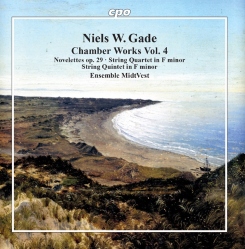
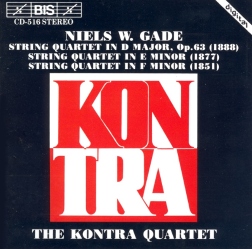
String quartet in F minor
Released Album
Recent Album
Works Info
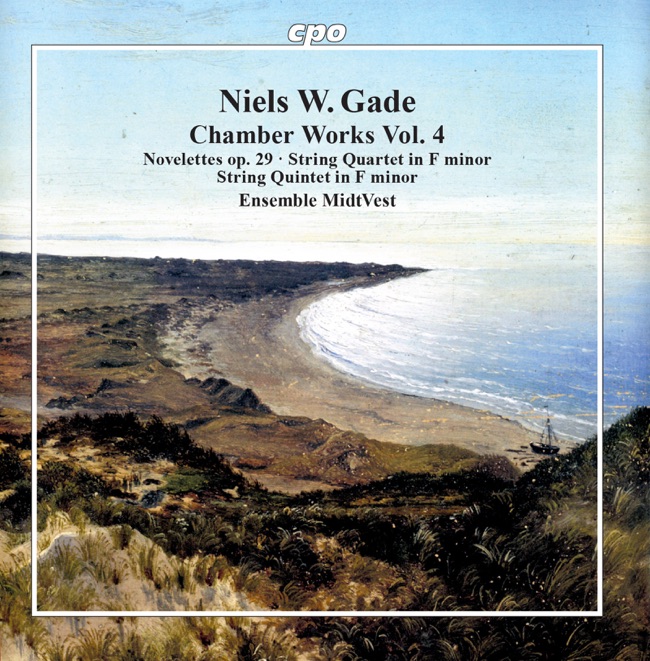
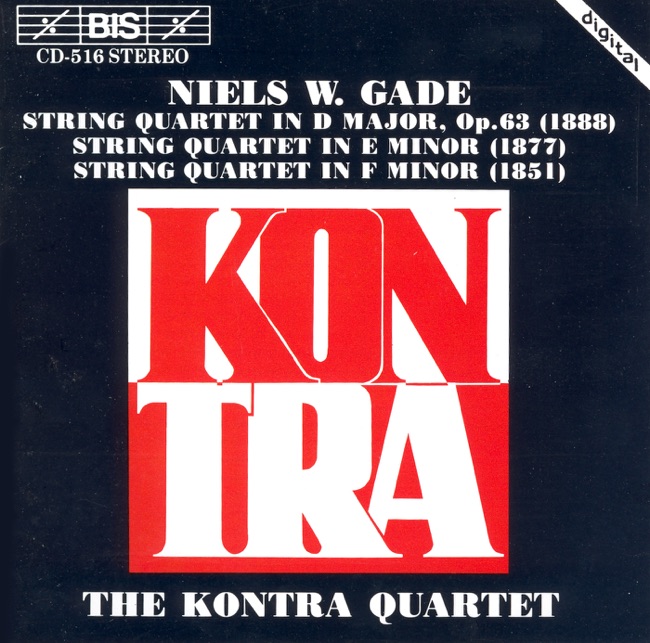
Composer:Niels GadeGenre:ChamberStyle:QuartetCompose Date:1851Average_duration:20:00Niels Gade's String Quartet in F minor, Op. 44, was composed in 1867 and premiered on January 22, 1868, in Copenhagen, Denmark. The quartet consists of four movements: Allegro moderato, Scherzo: Allegro vivace, Andantino con moto, and Allegro molto vivace. The first movement, Allegro moderato, begins with a melancholic and introspective theme in the cello, which is then taken up by the viola and the first violin. The second theme is more lively and energetic, with a sense of urgency and restlessness. The development section explores the themes in a more complex and contrapuntal way, leading to a powerful and dramatic recapitulation. The second movement, Scherzo: Allegro vivace, is a playful and rhythmic dance in triple meter. The main theme is introduced by the first violin and is then passed on to the other instruments. The trio section is more lyrical and features a beautiful melody in the cello. The third movement, Andantino con moto, is a lyrical and expressive adagio in F major. The main theme is introduced by the first violin and is then developed by the other instruments. The middle section is more agitated and features a dialogue between the first violin and the cello. The movement ends with a return to the main theme, played by the viola and the second violin. The final movement, Allegro molto vivace, is a lively and energetic rondo in F minor. The main theme is introduced by the first violin and is then developed by the other instruments. The middle section is more lyrical and features a beautiful melody in the cello. The movement ends with a powerful and triumphant coda. Overall, Niels Gade's String Quartet in F minor is a masterpiece of the Romantic era. It showcases Gade's mastery of form, harmony, and counterpoint, as well as his ability to create beautiful and expressive melodies. The quartet is characterized by its emotional intensity, its dramatic contrasts, and its sense of unity and coherence. It remains one of Gade's most popular and beloved works, and a testament to his enduring legacy as a composer.More....