Johann Jacob Froberger
Toccata No. 6, for organ in G minor, FbWV 106
Released Album
Recent Album







Works Info
Composer:Johann Jacob FrobergerGenre:KeyboardStyle:ToccataCompose Date:before 1649Publication Date:1649Average_duration:5:27Johann Jacob Froberger's Toccata No. 6, for organ in G minor, FbWV 106, is a stunning example of Baroque organ music. Composed in the mid-17th century, the piece is a testament to Froberger's skill as a composer and his deep understanding of the capabilities of the organ. The Toccata No. 6 is believed to have been composed around 1656-1657, during Froberger's time in Vienna. It is one of a set of seven toccatas that he composed for the organ, and is considered one of his most significant works for the instrument. The piece is comprised of three movements: a fast and lively toccata, a slower and more contemplative adagio, and a final fugue that brings the piece to a thrilling conclusion. The toccata is characterized by its virtuosic runs and arpeggios, which showcase the organ's ability to produce a wide range of sounds and textures. The adagio, by contrast, is more introspective, with a haunting melody that is played over a simple accompaniment. The fugue is a tour-de-force of counterpoint, with multiple voices weaving in and out of each other in a complex and intricate dance. Throughout the piece, Froberger demonstrates his mastery of the organ, using its various stops and registers to create a rich and varied sound palette. He also employs a wide range of musical techniques, including ornamentation, imitation, and modulation, to create a sense of depth and complexity. Overall, the Toccata No. 6 is a stunning example of Baroque organ music, and a testament to Froberger's skill as a composer. Its combination of virtuosity, introspection, and complexity make it a true masterpiece of the genre.More....
Works Music
Released Music
1
4:44
2

Toccata No. 6, for organ in G minor, FbWV 106
Toccata VI - da Sonarsi alla Leuatione for organ solo (FbWV 106, Libro Secondo)
4:54
4

4:52
5

5:25
6
5:25

8
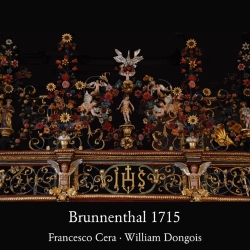
Toccata No. 6, for organ in G minor, FbWV 106
Toccata da sonarsi alla levatione in G, FbWV 106
5:59
9

Toccata No. 6, for organ in G minor, FbWV 106
Toccata da sonarsi alla Levatione g-Moll, FbWV 106
3:55