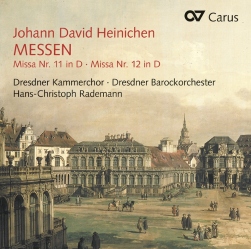
Johann David Heinichen
Missa No. 11 in D major
Released Album
Recent Album
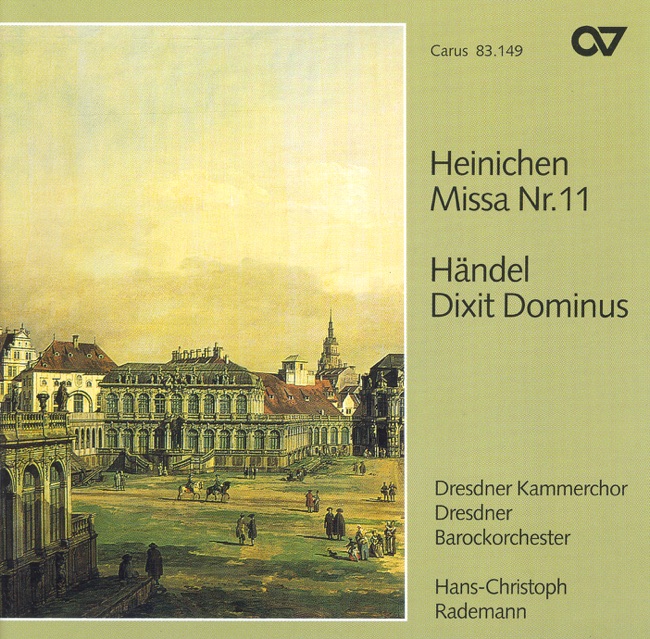
Featured Album
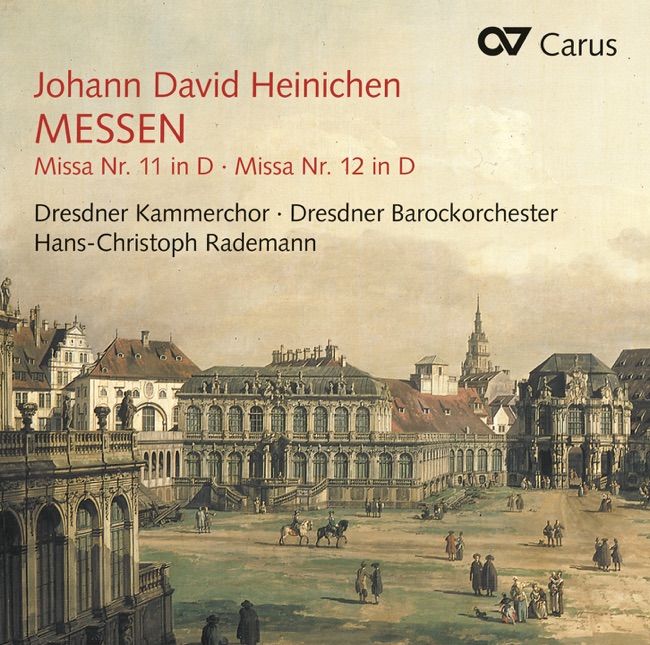
Works Info
Composer:Johann David HeinichenGenre:ChoralStyle:ChoralAverage_duration:31:27Movement_count:16Movement ....Johann David Heinichen's 'Missa No. 11 in D major' is a sacred choral work composed in the Baroque era. It was likely composed in the early 1720s during Heinichen's tenure as Kapellmeister at the court of the Elector of Saxony in Dresden. The work is scored for four vocal parts (soprano, alto, tenor, and bass) and a small orchestra consisting of two oboes, two trumpets, timpani, strings, and continuo. The 'Missa No. 11' is divided into six movements: Kyrie, Gloria, Credo, Sanctus, Benedictus, and Agnus Dei. The Kyrie is a solemn and introspective movement, with the choir and orchestra alternating between homophonic and polyphonic textures. The Gloria is a joyful and exuberant movement, featuring lively rhythms and intricate counterpoint. The Credo is the longest movement of the work, and is characterized by its grandeur and majesty. The Sanctus is a bright and celebratory movement, with the choir and orchestra alternating between fast and slow sections. The Benedictus is a brief and peaceful movement, featuring a solo quartet accompanied by the orchestra. The Agnus Dei is a somber and introspective movement, with the choir and orchestra gradually building to a powerful climax. Heinichen's 'Missa No. 11' is notable for its use of Baroque compositional techniques, such as the use of counterpoint, fugues, and ornamentation. The work also features a wide range of vocal and instrumental textures, from the grandeur of the full choir and orchestra to the intimacy of the solo quartet. Overall, the 'Missa No. 11' is a masterful example of Baroque sacred music, showcasing Heinichen's skill as a composer and his deep understanding of the liturgical traditions of his time.More....
Works Music
Released Music
Featured Music