


Johann Christian Bach
Dies irae, for 4 vocal soloists, double chorus & orchestra, CW E12 (T. 202/4)
Released Album
Recent Album
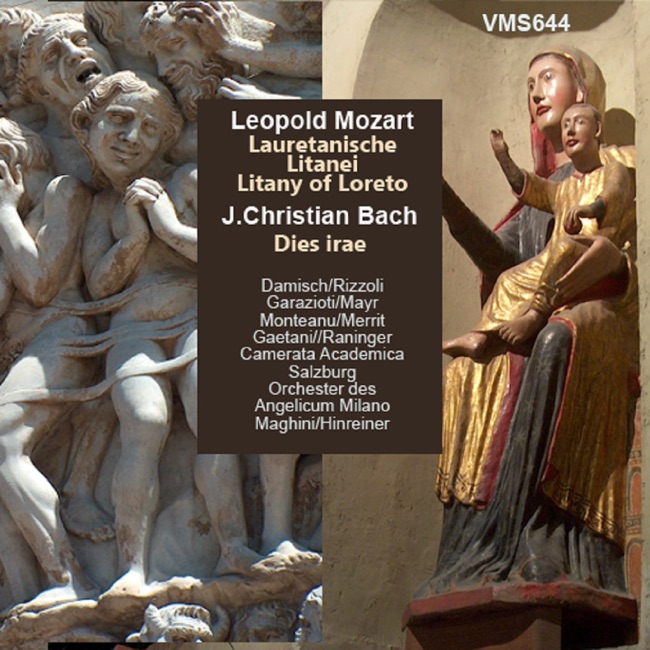
Works Info
Composer:Johann Christian BachGenre:ChoralStyle:RequiemCompose Date:May 1757Publication Date:1972First Performance:Aug 23, 1757Average_duration:36:55Johann Christian Bach's 'Dies irae' is a choral masterpiece that was composed in the late 18th century. The piece was premiered in London in 1773 and is considered one of Bach's most significant works. It is a setting of the Latin hymn 'Dies irae,' which translates to 'Day of Wrath.' The composition is divided into eight movements, each of which is characterized by its unique musical style and structure. The first movement, 'Dies irae,' is a powerful and dramatic opening that sets the tone for the rest of the piece. It features a double chorus and orchestra, with the four vocal soloists taking turns to sing the verses. The second movement, 'Tuba mirum,' is a solo for bass voice that is accompanied by the orchestra. It is a contemplative and mournful piece that reflects on the trumpet's sound that will announce the end of the world. The third movement, 'Mors stupebit,' is a duet for soprano and tenor that is accompanied by the orchestra. It is a haunting and beautiful piece that reflects on the fear and awe that will be felt by all on the day of judgment. The fourth movement, 'Liber scriptus,' is a solo for mezzo-soprano that is accompanied by the orchestra. It is a reflective and introspective piece that contemplates the judgment that will be passed on all souls. The fifth movement, 'Quid sum miser,' is a solo for tenor that is accompanied by the orchestra. It is a plaintive and sorrowful piece that reflects on the sinner's fate on the day of judgment. The sixth movement, 'Rex tremendae,' is a double chorus and orchestra piece that is a powerful and majestic tribute to the King of Kings. The seventh movement, 'Recordare,' is a solo for soprano that is accompanied by the orchestra. It is a gentle and tender piece that implores the Lord to remember the faithful on the day of judgment. The final movement, 'Ingemisco,' is a solo for tenor that is accompanied by the orchestra. It is a sorrowful and mournful piece that reflects on the sinner's fate and implores the Lord for mercy. Overall, 'Dies irae' is a powerful and moving choral work that showcases Bach's mastery of composition and his ability to evoke deep emotions through music. Its eight movements are a testament to the power of music to inspire and uplift the human spirit.More....
Works Music
Released Music
1
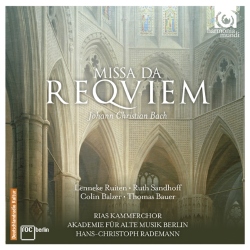
Dies irae, for 4 vocal soloists, double chorus & orchestra, CW E12 (T. 202/4)
12. Coro. Lacrimosa
5:59
2
36:55
3
36:55
4
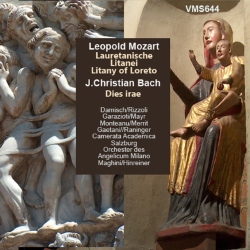
Dies irae, for 4 vocal soloists, double chorus & orchestra, CW E12 (T. 202/4)
Sinfonia - Dias Irae
3:13